For a business, plumbing becomes an emergency when water or sewage threatens the stock, the floor, the health inspection or the day's revenue. Rates for commercial work in national guides start near $90 an hour and climb with urgency. This page explains how to triage the problem and what to expect. Routine work gets its own pages, for example commercial backflow testing and the commercial hourly cost guide.
What does an emergency commercial plumbing call cover?
It covers whatever stops the business from operating safely: a split supply line, a sewer or floor drain backing up, an overflowing restroom, a dead water heater feeding a kitchen or a seized main shutoff. First comes containment; the permanent repair gets planned afterward.
Typical urgent calls from retail, restaurant, office and light-industrial spaces include:
- Sewage or gray water rising out of floor drains or restroom fixtures.
- A pipe split in a ceiling, wall or mechanical room.
- A water heater or boiler leaking into storage or equipment.
- A fixture that will not stop running, with no working shutoff nearby.
- No water at all, or none of the hot variety, in a kitchen that must open.
Stopping the loss first is the right order. A temporary repair that holds the building until a full fix is scheduled is common, and a plumber should say plainly which one you are getting.
Which signs mean I should not wait?
Do not wait when sewage is rising, water is pouring from a ceiling, wiring or an electrical panel is near wet floor, a gas smell appears near a water heater or boiler, or a restroom is the only one on site. Slow drains and weak flow can usually wait for a business-hours visit.
Smell gas and the whole building empties. At a safe distance, phone SoCalGas on (800) 427-2200. Injuries or immediate danger are for 911. Gas piping is touched only by a contractor who has a California license and a permit; staff should never attempt it.
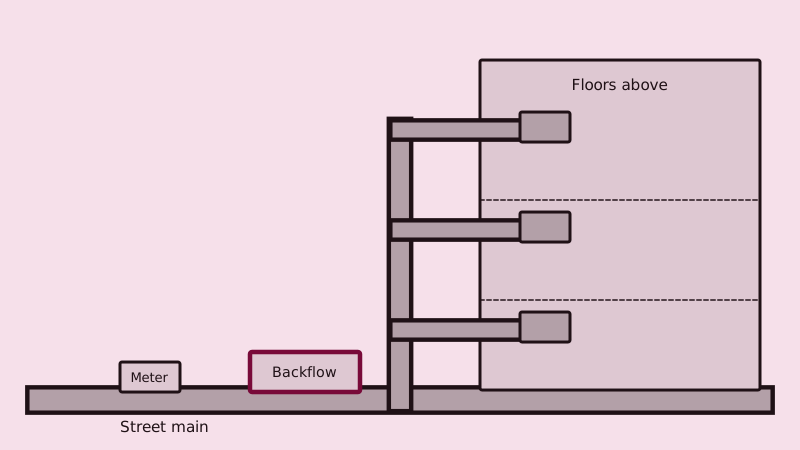
While you wait, close the closest isolation valve or the main, lift stock and electronics off the floor, keep customers out of wet areas and photograph everything for the landlord or insurer. Cut power to equipment standing in water only when the switch can be reached dry.
What do commercial plumbers charge for emergency work?
National guides put commercial plumbing at $90-$200 an hour with a $140 average, and emergency or after-hours work at $100-$250 an hour averaging $175, which is usually 1.5-2 times the regular rate. Flat trip charges run $50-$100. Those are averages; only a bid for your building gives a real figure.
A second guide covering residential work lists standard rates of $75-$150 an hour and emergency hours at $150-$300, plus an emergency trip fee of $100-$200 and a minimum charge of $100-$200. The two sources disagree at the edges, which is normal. Rates rise with the hour, with holiday timing and with the difficulty of the job.
What drives the price beyond the hourly rate?
Parts and materials, access, how many people are sent, whether a permit is involved, and specialist gear like a camera on a cable, a jetter or an acoustic leak locator. Roof, ceiling and mechanical-room work tends to run longer than a fixture swap, and large pipes cost more than small ones.
Ask the contractor for the minimum charge, and whether billing starts at dispatch or on arrival. Find out if drive time is charged and whether the number is flat or time-and-materials. For a repair you can pause, get two bids. For a flood, do not delay stopping the damage to shop for the cheapest.
A big job deserves a lookup of the contractor on the CSLB's website first. The license rule starts once the combined labor and materials reach $1,000, and it also covers any permitted work. Permit questions for Whittier addresses go to the municipal building desk. In Santa Fe Springs, where industrial and mixed-use buildings are common, the city has a separate Building and Safety counter that its page lists as closed Fridays.
Who pays: the tenant, the landlord or the building?
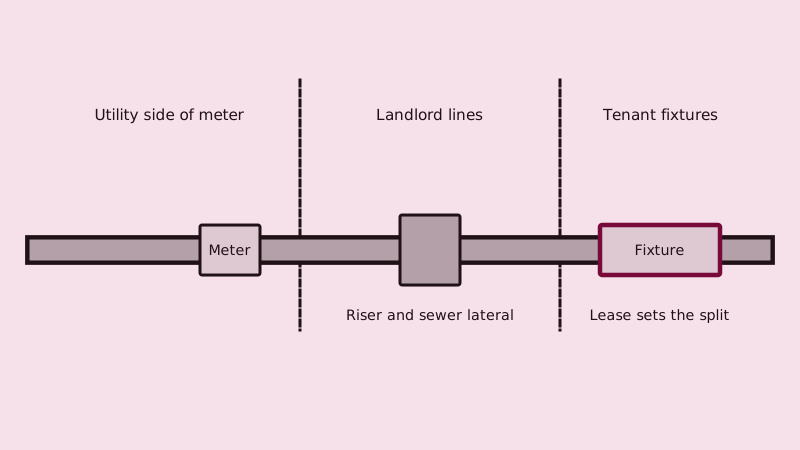
That depends on the lease, and plumbing inside a unit is often split from the building's main lines. A tenant usually handles fixtures and drains in the space, while a landlord handles risers, sewer laterals and shared systems, but leases differ. Read yours before approving large work.
Call the property manager early. If the failure is in a shared line, the manager may already have a vendor or may need to authorize the visit. Ask for approval in writing before work that you expect to bill back. Keep the invoice, photos and the time the problem began, which matter to an insurer.
Do backflow devices and testing come into this?
Sometimes. A failed or leaking backflow assembly on a fire line, irrigation system or process line can be an urgent repair, and some water providers require periodic testing of these devices. Test schedules are set by the water provider and city, so ask yours what applies to your building.
The routine side is explained in backflow prevention testing and the walkthrough on how a test is performed. If a provider has issued a notice, treat the deadline seriously and do not wait for the device to fail.
What if I just need a plumbing business near me?
Use the request form to list the address, your type of business and what has gone wrong, and say whether it is an emergency or can wait for the next open slot. After that, a local plumber is arranged to price the job, with no need to repeat yourself.
The office is open Monday to Friday from 9am to 5pm. There is no overnight line, and nothing on this page commits to an arrival time. After hours, stop the leak with the nearest shutoff, protect the space and send the request; it is read when the office opens. Residential owners with similar problems can use the home plumbing page.
Common questions
How soon can the business get running again?
Stopping an active leak is often quick once someone is on site and the shutoff is found. Locating a hidden source, clearing a main sewer line or replacing a heater takes longer. Expect the plumber to give a time estimate after seeing the problem, and ask whether the building can reopen after the temporary fix.
What should I confirm before approving the work?
Confirm the contractor license number through the CSLB, the hourly rate and minimum, when the meter starts running, and whether parts, permit and cleanup are included. Separate what is temporary from what is permanent, and put the scope on paper before approving anything past stopping the damage.
Does a manager have to be present?
Yes, whoever runs the space: to unlock doors, point to shutoffs and the water heater, and approve extra work. Where several tenants share a building, the property manager or a designee may have to open mechanical rooms and roof access. Plan on clearing customers from the area.
Is a backed-up restroom an emergency?
If it is the only restroom, it is an operating problem, and your county health department can say whether the business must close. Sewage on the floor is a hazard. Stop using the fixtures, close off the room, and call. A single slow sink in a busy building is usually a next-business-day job.
In this section
- Commercial plumbing
Commercial backflow testing for Whittier businesses: who must test, how often, what the water supplier sends, what failing means and how…
- Costs
Commercial plumbers commonly bill about $100 to $200 an hour, with after-hours work priced higher.
Every service and price guide is on plumber across Whittier.