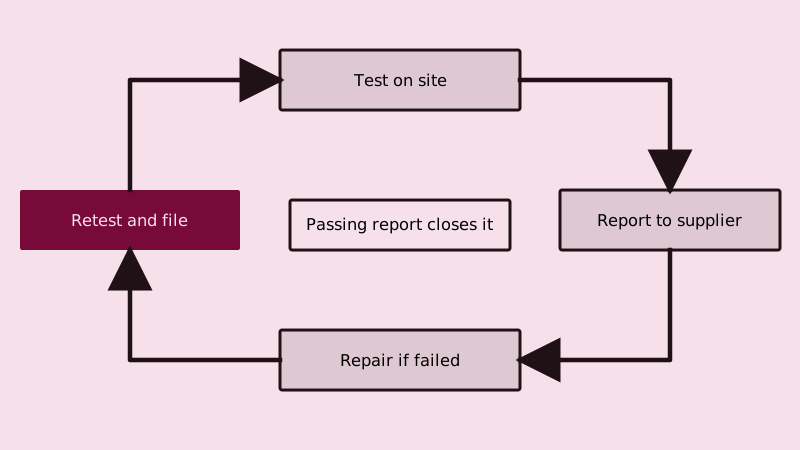
Expect a service like this to cover four tasks: testing your assembly on site, sending a signed report to the water supplier, repairing or replacing a failed unit and retesting afterward. Once a notice says a test is due, arrange the visit, make the device reachable and keep the report. Related rules are on the permits, codes and inspections page, and the home page is where requests begin.
What is covered by the service?
A tester visits the property, closes the assembly's valves, hooks a gauge kit up to the test cocks, logs how each internal check valve and relief mechanism performs and fills out the report. A passing result goes to the water supplier. After a failure, the tester names the fault and the repair or replacement it needs.
Typical scope:
- Locating and identifying each assembly at the address.
- Testing and recording the results on the form your supplier requires.
- Cleaning or rebuilding a fouled valve, where practical.
- Replacing a failed assembly, which may need a permit.
- Retesting after the repair and filing the passing report.
The procedure itself has its own page, the test, step by step; this page deals with ordering and what you get back.
Who is your supplier, and who requires the test?
Under Title 17, California water suppliers operate cross-connection programs, and assemblies other than air gaps get tested at installation and then yearly. Your supplier sends the notice. Around Whittier that could be the City of Whittier water system, Golden State Water or another company, depending on the street; call whoever bills you.
The City of Whittier supplies water from groundwater wells, per its 2025 report, and its water customer service number is (562) 567-9530. Golden State Water's Central Basin East area includes portions of Whittier, and its customer service line is 1-800-999-4033. Other suppliers serve parts of the area. Ask what the supplier has on file for your address, when each test falls due and whether it maintains an approved-tester roster.
Which properties need testing, and what does the supplier look at?
Homes with lawn sprinkler systems, pools or fire sprinkler lines commonly have a device on file, and businesses with higher-hazard use, such as food service, car washes, medical offices or industrial processes, are more likely to need one. The supplier decides based on the hazard at the connection. The details differ, so rely on the notice you receive.
Devices turn up at a sprinkler system with a brass valve cluster beside the house, a commercial kitchen's water service, a fire line or a shop that mixes chemicals. Business sites are covered by commercial backflow testing, the program side by backflow prevention testing, and pricing by backflow device testing cost.
Can a test be done next day?
Sometimes, but I will not promise it. Availability depends on the tester's schedule, the number of devices and how close you are to the supplier's deadline. A notice normally gives a window, and booking early leaves room for a failed test, a repair and a retest before the due date. If the deadline is close, say so when you call.
Speed comes from a clear route to the device, the notice or account number in hand, the make, model and size read off the body and a person who can unlock gates. A locked gate or an indoor device is what usually delays a visit.
What paperwork do you get, and who files it?
The report you get back shows where the assembly sits, its make, model and serial number, the date and the readings, ending in pass or fail. The tester normally submits it to the supplier, but confirm who does. Hold on to your copy, since a missed filing can bring a notice or an interruption of service.
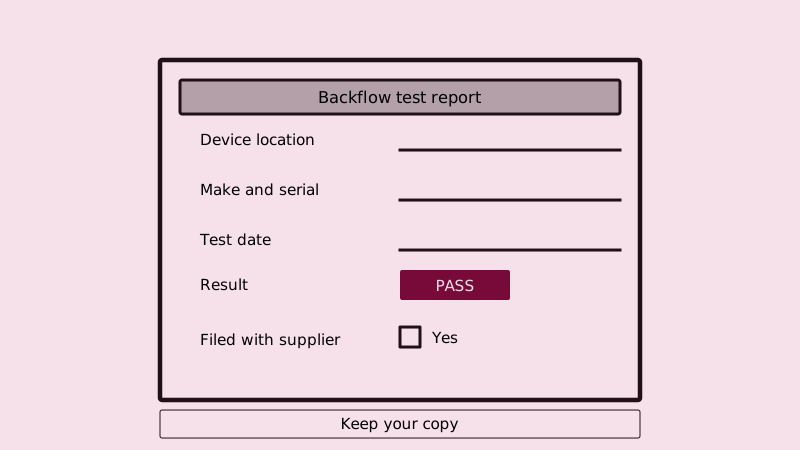
The state rules let suppliers keep reports and, for noncompliance, authorize service termination. Do not wait for a second notice. If you did not get a notice at all, call the supplier and ask whether a device is on file for the address. Keep each year's report in one place so you can see the next due date.
What happens after a fail?
A failed assembly gets cleaned, rebuilt with fresh parts or swapped for a new one, and then retested. A new assembly commonly needs a city permit, and the installer must hold a California contractor license. Whittier's Building & Safety Division, (562) 567-9320, issues permits, so ask what applies first.
May an owner take out their own plumbing permit? Several California cities let an owner-occupant do so for their own house, under conditions each city sets, and some work is reserved for contractors. Whittier's policy was not verified, so ask the building division. Gas piping is regulated work; see residential gas piping codes.
Is an online credential enough to be a tester?
No evidence turned up that an online-only credential satisfies California suppliers, so I will not claim it does. Suppliers generally accept the credential they recognize, which normally involves hands-on training and an exam. Ask yours which credentials count and whether it keeps an approved list, and run any contractor's license through cslb.ca.gov.
When hiring, request proof of the credential your supplier accepts, and a license number if repairs are part of the deal. Get one written price covering the test, the filing, any repair and a retest. A quote can be started on the price request page.
Common questions
Does a visit take long?
One residential device usually tests in well under an hour after setup. More devices, awkward access or a repair add time. With parts on the truck, a rebuild and retest may happen the same day; if not, a second trip follows.
How do I vet a tester?
Find out which credential they hold and whether your supplier accepts it, who files the report, what the price includes and how failures are handled. Ask for written pricing for the test, a rebuild and a retest, and look up any license number with the state board.
Who has to be on site?
An adult must open access to the device and accept a brief water interruption of the supply at that point. For a locked yard, garage or utility room, arrange entry in advance. A few suppliers insist on an adult being present, so ask at booking.
Is there a quick checklist for the process?
Yes, and it is short: find the notice, locate the device, clear access, note make and model, book early, collect a copy of the report, confirm it was filed and mark next year's test date. Gauge readings and pass criteria belong to the tester and the supplier's procedure.
Is a failed test an emergency?
Not usually, but it has a deadline. A failed assembly means contaminated water could reach the supply under certain conditions, and suppliers can require repair within a set time or shut service. Arrange the repair promptly and keep the retest report. If you see leaking or damaged equipment, call a plumber right away.
References
- State Water Resources Control Board, cross-connection control under California Code of Regulations Title 17, sections 7583 to 7605
- City of Whittier 2025 Consumer Confidence Report (city water system, groundwater supply)
- Golden State Water, Central Basin East service area
- California Contractors State License Board