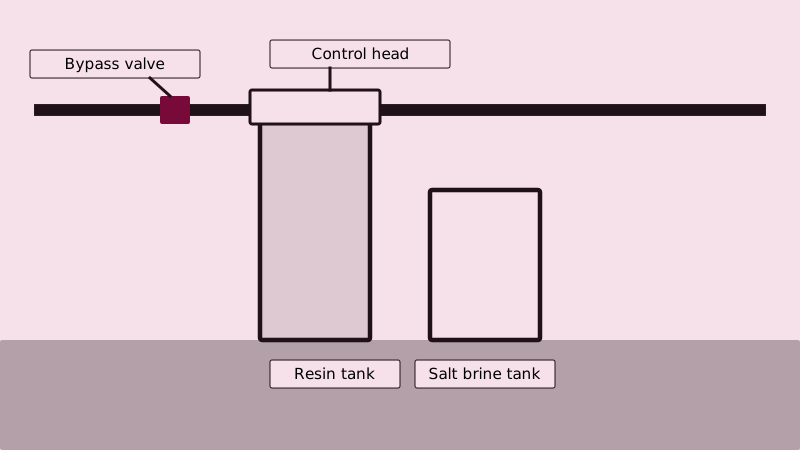
Thumbtack's national data puts a typical softener job between $406 and $1,397, with a low of $167 and a high of $3,191, and those totals blend the machine with the plumbing. Treat them as a guide, since a Southern California quote can differ. The detailed water softener installation page explains the work itself; start a request from the home page to get a written number.
How much should a softener installation run?
As a guide, the whole job lands between about $406 and $1,397 for most homes nationally. Thumbtack lists a basic ion exchange unit at $400 to $1,000, and installation extras on top, from about $250 for a house already plumbed for a softener (one pro's example) to as much as $750 when new pipe must run through the attic or around the house.
Thumbtack's line items, which describe typical jobs rather than yours:
| Piece | Figure from Thumbtack (the $250 and $350 lines are one Arizona pro's examples) |
|---|---|
| Basic ion exchange unit | $400 to $1,000 |
| House already plumbed for a softener | about $250 to install |
| Easily reached water main | about $350 |
| Running pipe around the house or through the attic | up to $750 |
| Out-of-warranty repair | about $134 on average |
Add the unit price and the connection work you expect, and you have a working estimate. That is the calculator most people actually need; a web form cannot see your garage.
Why is the plumbing the part that moves the price?
Because a machine comes with a sticker price and the pipe work does not. Plumbed in just before the water heater, the softener has needs a bypass valve plus a drain for the rinse cycle. Distance from the supply entry and the presence of a ready-made loop set the labor hours.
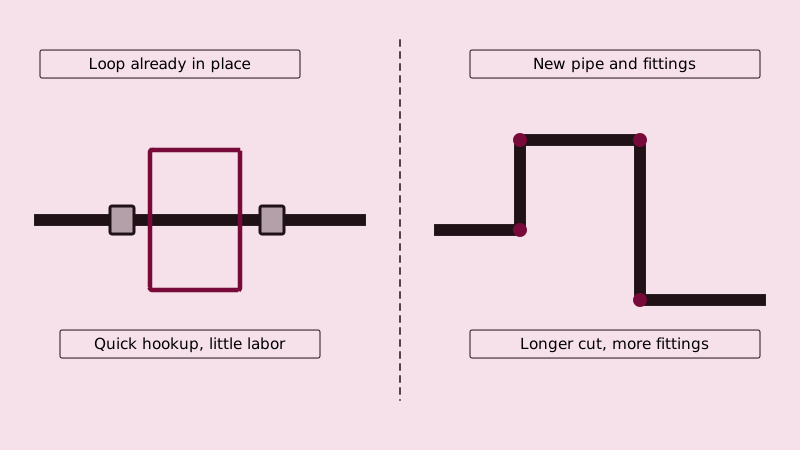
A "loop" is a short section of pipe, often with shutoff and bypass valves, that a builder or earlier owner left at the supply entry so a softener can drop in. If you have one, installation is quick. If not, the plumber has to cut into the main and may add fittings, supports and a drain line. The softener drain line is its own task, and our guide on salt-based installation covers the setup.
Which extras swell or shrink the bill?
Extras matter: running an electrical outlet nearby, adding a pressure regulator, moving the unit indoors from a garage, a permit if the city asks for one, or rerouting an old pipe. Salt is a running cost, too; Thumbtack prices salt at $5.50 per 40-pound bag, potassium at $30.
Other items worth asking about:
- Pipe material. Copper takes longer to cut and sweat than PEX, and galvanized steel may need replacing near the connection.
- Water pressure. Strong pressure wears out a valve head sooner; the pressure regulator cost page deals with that fix.
- Location. A garage wall near the main is cheapest. An attic or a far corner of the lot is not.
- Drain access. The cleaning cycle sends brine down a drain, which needs a proper air gap.
- Haul-away. Removing an old softener is sometimes extra.
Does a Kinetico or Culligan cost more to hook up?
Rarely. Brand drives the machine's price and warranty; the plumbing around a Kinetico, a Culligan, a Rheem or a big-box store model looks much the same. Some brands sell installation through their own dealers, and that price can be bundled, so ask for the machine and the install broken out.
Check a few things before buying: the maker's warranty terms, whether the warranty only covers an install performed by a contractor with a current state contractor license, how salt use is rated and where parts come from. A cheap machine with a hard-to-find valve head costs more over time. Sizing is covered under whole-house softener installation cost.
Is the water here hard enough to justify one?
Probably worth considering. The City of Whittier's 2025 water quality report shows total hardness averaging 250 mg/L, with a range of 230 to 270, equal to 14.6 grains in a gallon. On the USGS chart, "very hard" means 180 mg/L and up. A few other suppliers cover pockets of the city, so find the report that matches your bill.
For comparison, the city reports in southeast LA County vary: Pico Rivera's city water averaged about 174 mg/L in its 2023 report, Santa Fe Springs groundwater about 260 mg/L, and Golden State Water's Norwalk system 310 mg/L in 2025. Hardness is the reason people see scale on faucets and in water heaters. For more fixes, try preventing scale; existing buildup is the subject of removing hard water scale.
How can you line up competing quotes?
Give each bidder the same checklist: unit model and capacity, plumbing tie-in, drain, outlet, permit, haul-away and warranty, priced separately. A bid that omits the bypass or the drain only looks cheap. Verify every contractor license number through CSLB. Ask each bidder to confirm the start date in writing.
The state's license rule probably applies: $1,000 in labor plus materials triggers it, as does any permit requirement, and a written contract is required above $500. The state also limits deposits, generally at a tenth of the contract or $1,000, whichever is smaller; CSLB has the current number. Certain water agencies restrict salt-based units because of what reaches the sewer; I found no Whittier rule, so ask City Hall or your supplier first.
Common questions
Is it an hour or a day?
A few hours covers a house with a loop or an easy main. Added pipe, an outlet or a drain run can stretch the visit across most of a day. The supply is shut only in stretches, and the control head gets a short setup and flush last.
What should I ask the installer?
Get the license number, the exact unit and capacity, and a list of what the hookup includes. Find out who takes care of the drain and any permit, and ask for warranty terms and salt or potassium needs in writing, each cost on a separate line.
Do I have to stay at home during the job?
For the start and finish, yes. The installer needs the shutoff, the utility spot and an outlet, and you should be shown the bypass valve and how salt gets added. Keep animals clear of the work zone, since the area will have open pipe and tools.
Does a softener also filter the water?
No. Ion exchange replaces the calcium and magnesium with sodium or potassium, which cuts scale, and it does not remove chlorine, lead or other contaminants. A filter or a reverse osmosis unit does a different job. Many homes use a softener for the whole house and a filter at the kitchen tap.
Could a softener lower bills or extend a heater's life?
It does not change your water bill directly, though scale-free fixtures and a cleaner heater can run more efficiently. Hard water leaves scale on heater elements and tank floors, which a softener slows. I do not have a verified savings figure, so I will not promise one.