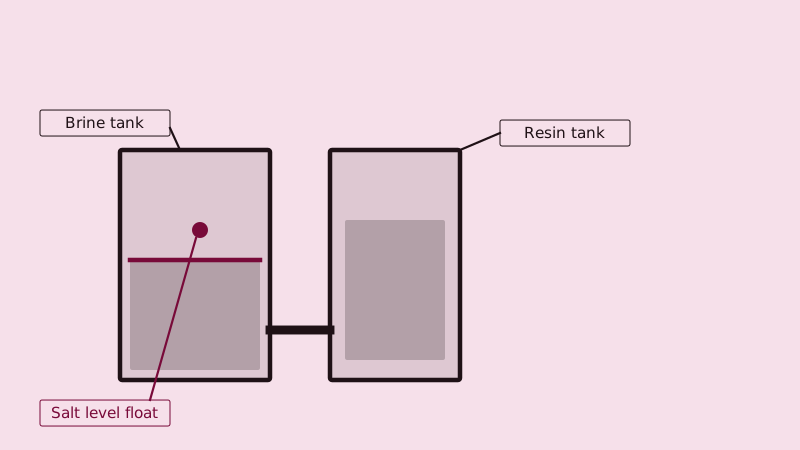
Inside a salt based softener sits a bed of resin beads that capture the dissolved calcium and magnesium and give back sodium instead; a brine wash then recharges them. An installer ties it into the main supply just past the shutoff, plus a bypass, a drain hookup and an outlet for the controller. Not sure it is worth having? The overview of water softener installation comes first.
How can I find out my hardness before buying a softener?
Look up your supplier's yearly water report, or buy a test kit. Hardness appears as milligrams per liter (mg/L, equal to parts per million) or as grains per gallon, with one grain equal to 17.1 mg/L. Readings above 180 mg/L land in the USGS very hard class, so see where yours falls.
Published figures differ a lot across the area, and which supplier serves your street decides the number:
| Supplier or city system | Reported total hardness | Grains per gallon |
|---|---|---|
| City of Whittier (2025 report) | 250 mg/L average, range 230 to 270 | about 14.6 |
| Golden State Water, Norwalk system (2025) | 310 mg/L average, range 137 to 505 | about 18 |
| La Habra Heights County Water District (2023) | 309.8 mg/L average | 18.1 |
| City of Santa Fe Springs groundwater (2023) | 260 mg/L average, range 220 to 300 | about 15 |
Those are single reports from specific systems and years; figures move with the water source. The city of Santa Fe Springs also reports a lower figure for imported surface water, about 100 mg/L. Use the report for whichever system actually bills you. Several cities here, Whittier among them, are served by more than one provider, and your bill names which one is yours.
How big a softener does my house need?
Sizing turns on how many grains of hardness the unit can remove between regenerations. Multiply residents by daily gallons per person (60 to 80 is a commonly assumed figure) and by the hardness figure in grains per gallon. That gives grains per day, and the unit's capacity should carry several days' worth.
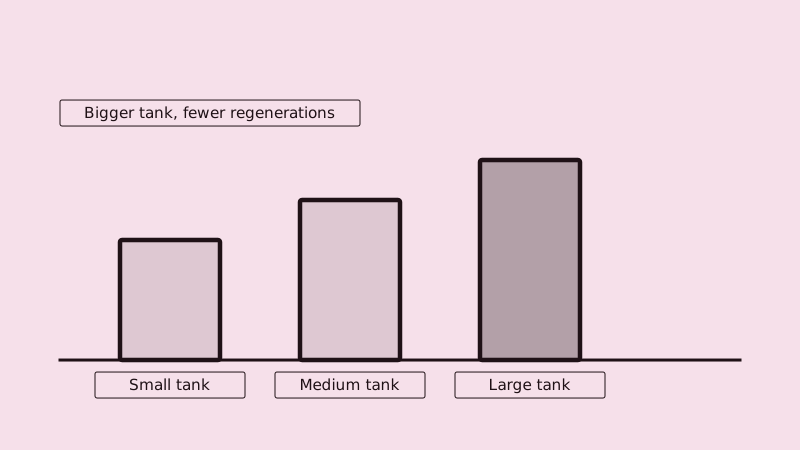
Here is a worked example with local figures: four people at 70 gallons daily means 280 gallons, which at Whittier's 14.6 grains per gallon is close to 4,100 grains of hardness each day. A softener rated for 32,000 grains would then regenerate roughly once a week. In harder water, such as the 18 grains per gallon reported for parts of Norwalk and La Habra Heights, the same house regenerates more often.
Flow rate counts as well. Several bathrooms running together need a unit and pipe sized to pass the water without a big pressure loss. A plumber can match unit and valve to your pipe, which beats trusting a box label. Too large a unit wastes salt and money; too small regenerates nonstop.
Where is a softener placed, and what gets connected?
Common spots are a garage or utility closet, often near the water heater, tied in after the shutoff and before the heater. It wants a bypass valve, a drain, an outlet and room for salt bags. Hose bibs outside usually stay on untreated water.
The usual order of work:
- Close the water and cut into the supply pipe.
- Mount the bypass valve and connect inlet and outlet.
- Run a drain hose to a standpipe, floor drain or laundry tub, leaving an air gap so waste water cannot siphon back.
- Add an overflow line from the brine tank.
- Power the control head, enter the hardness and the time, and load the brine tank with salt.
- Start a regeneration, check every connection under pressure and test the water.
Drains are where houses differ most. With none nearby, the installer may have to add a line. Options are explained in softener drain line installation, and the step-by-step softener install walks the whole process.
Is a permit required, and who can legally install it?
The answer varies by city and scope, so ask the building department; Whittier's is the Building and Safety Division at (562) 567-9320. Under state rules a contractor license applies wherever a permit does, and to any project of $1,000 or more with labor and materials added.
Ask also whether any local rule limits discharge from salt based softeners to the sewer. This page does not state such a rule because we did not verify one for these cities, so a plumber or the sanitation agency is the right source. Get the permit question answered in writing as part of the quote.
What are the drawbacks of a salt based unit?
It adds sodium, spends salt and water on every regeneration, and needs a drain. Low-sodium diets are a question for your doctor. Expect periodic salt checks and the occasional resin or valve repair. Whether the benefits win out depends on how hard your water really is.
The upside is real. The USGS says scale from hard water wears out equipment, pushes up heating costs and clogs pipes; soap lathers more easily in soft water too. A softener removes hardness and nothing else, so it does not purify. Raise drinking water quality separately with a filtration question.
A bill that climbs after installation is worth checking against softeners and water bills. For scale already built up, see removing hard water scale; preventing scale looks at alternatives to a softener.
What does installation cost?
The price shifts with unit choice, plumbing changes, the drain and any permit, so this page prints no number. Compare written quotes that keep equipment and labor on separate lines. Pricing factors are broken out in whole-house softener pricing and softener installation cost.
How do I get a softener installed?
Give your city, water supplier (if known), household size, preferred location for the unit and the nearest drain in the price request form. A plumber nearby then visits, assesses the spot and delivers a written quote prior to any work.
Our service areas span Whittier and the cities around it, all named on the service areas page. The remaining work we arrange is described on the Rio Hondo Plumbing front page.
Common questions
How frequently does a softener need salt?
That depends on hardness, household size and the tank. Many owners refill every few weeks, and a monthly look at the level is a safe habit. Keep salt above the waterline in the brine tank, and use the salt type the manual names.
Is a DIY installation realistic?
Some owners manage it, but the job cuts into the main supply, needs a drain that keeps an air gap and may need a permit. Anyone unsure about pipe work is better off with a plumber, and any local rules should be mentioned before work starts.
Could a softener lower my water pressure?
A unit sized correctly causes just a small drop. One too small for the flow, or a fouled resin bed, can cut pressure noticeably. If pressure sags after installation, have the plumber re-check the sizing, the bypass and the valve.
Does softened water taste different?
With very hard water the exchange adds more sodium, so a faint saltiness is possible, though plenty of people notice little change. A separate drinking tap or filter can be added if you would rather drink untreated water in the kitchen.
What is the bypass valve for?
With it you can cut the unit out of the loop for service, or send untreated water through the house while a repair is under way. Every install should include one, and the plumber ought to show you how to operate it before leaving.