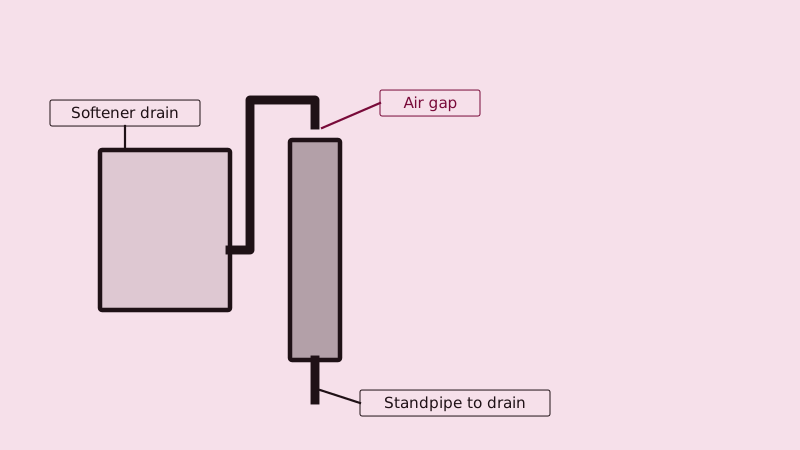
Every salt-based softener flushes itself, and the water and brine from that cycle have to go somewhere. The answer is a dedicated drain line ending at an approved spot with a gap of open air in it. A slow or blocked drain is also a drain problem first, so our page on clogged drains and toilets is a useful companion. For installation help, use the price request form.
Where should a softener drain line end?
The usual choices are a laundry standpipe, a utility sink, a floor drain or a dedicated stub with a trap, in each case with an air gap between the end of the hose and the drain. The point is that wastewater can never be pulled back into the softener. Pick the spot closest to the unit that meets those conditions.
A laundry standpipe is the most common in garages and utility rooms because it already has a trap and a vent. A floor drain works if it is close and sized to take the flow. A utility sink works if the hose clips above the rim. Running the drain outdoors onto the ground, a planter or a dry well is not a casual option, because the brine can harm plants and soil and may be restricted by local rules. Ask first.
What is an air gap, and why does it matter?
An air gap is a physical space, open to the air, between the end of the drain hose and the top of the drain it empties into. It stops sewage or standing wastewater from siphoning back into the softener if the drain backs up. Plumbing codes require this kind of protection for equipment like this.
Most manuals specify a minimum gap, often measured in inches, so the hose end must sit above the standpipe's rim or the sink's flood level, not inside the pipe. Many installers use an air-gap fitting on the line. If the hose is pushed down into a standpipe and sealed, regeneration water can flow back toward the unit in a backup, which is the very thing the gap prevents. Follow the maker's instructions and the California Plumbing Code, and ask the plumber to show you the gap when the job is done.
How is the drain line run, and how long can it be?
A small flexible tube leaves the control head, usually a half-inch line, and runs to the drain, with a separate overflow line from the brine tank. The manual limits how long and how high the line may run, because the unit's pressure can only push the flow so far. Keep it short, supported and free of kinks.
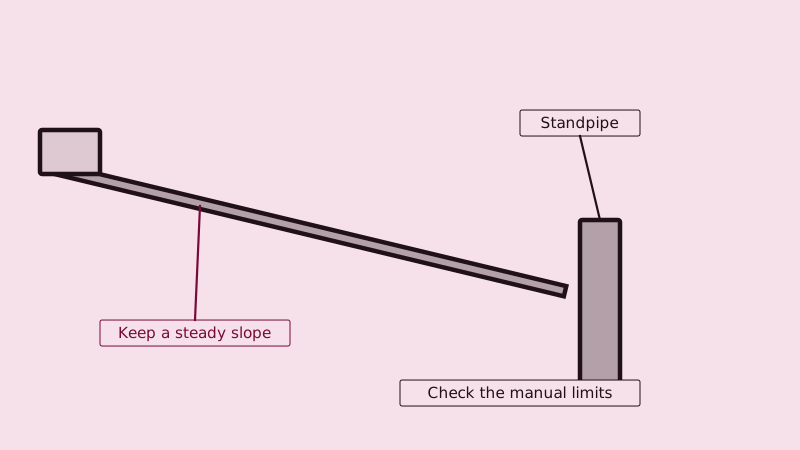
Check the manual for the maximum rise above the floor and total length. Where the standpipe is on the far side of a room, the plumber may route the hose along the wall rather than add a long run. Use a separate overflow line for the brine tank, positioned to drain by gravity to a safe spot and not joined to the regeneration line. Never tie the two into the same restriction. Label the lines so a later plumber can tell them apart.
Can a softener drain line cause clogs or backups?
It can. A standpipe that is too small, partly clogged with soap and lint, or lacking a proper trap cannot take the rinse flow, and water can come up through the standpipe. Slow washer drains and gurgling after regeneration are the clues that the line has a blockage somewhere.
Fixes depend on where the restriction is. A plumber can clear a standpipe or branch with a drain snake, or in a heavily built-up line with hydro jetting, which uses high-pressure water. Pouring baking soda and vinegar rarely helps a solid blockage. If the sink or floor drain near the softener also drains slowly, the trouble may be in the main line. Read the notes on slow kitchen sink drains and clearing a kitchen sink for clues about the shared line.
Does my city allow a softener to discharge to the sewer?
Often, yes, but it is a local question. California law lets local agencies in certain regions restrict or prohibit residential self-regenerating softeners that discharge brine to a community sewer, but only after meeting conditions in the Health and Safety Code. We have not verified a rule for each city we cover, so ask your own sewer agency.
When in doubt, call the building office for permit questions. Whittier's Building and Safety Division is at (562) 567-9320. If a rule applies to you, alternatives include a salt-free conditioner, which has no brine and needs no drain, or a service exchange tank that a dealer regenerates off site. Our softener installation page has more on choosing between them. State law requires a contractor license for work of $1,000 or more in labor and materials, and for any job that needs a permit.
What affects the drain line portion of the cost?
The drain portion of a softener installation depends on how far the line must run, whether an existing standpipe is nearby, whether a new standpipe or floor drain connection is needed, and what the building office requires. We do not print a price because we have no sourced local figure for this part of the job.
Ask the quote to show the drain work as its own line, and to say how the air gap will be made. Ask who is responsible if the drain backs up in the first month. Whittier's water averaged about 250 mg/L total hardness in the 2025 report, so softeners there are common, and a plumber who sets up drain lines regularly knows what the local sewer sees. For total costs, look at installation cost. The home page lists everything else we arrange.
Common questions
Can I run a softener drain into a utility sink?
Yes, if the hose ends above the sink's rim with an air gap and the sink drains freely. Secure the hose so it cannot slip down into the basin. A sink that drains slowly will not handle the rinse flow, so clear it first.
Can the softener drain into a floor drain?
Often, yes. The floor drain must be close, trapped and large enough to carry the flow, and the hose must end above the grate or in an air-gap fitting. If the drain has a dry trap or smells, the plumber may need to refill the trap or add a trap primer.
What is a high loop on a drain hose?
A high loop is an upward bend in the hose near the drain end that helps prevent backflow, and some manuals call for one. It is not a replacement for an air gap. Follow the manual, and let the plumber decide how to combine a loop with the gap.
How do I know if the drain line is clogged?
Water rising at the standpipe or sink during regeneration, slow draining in nearby fixtures and a gurgling sound are the signs. Stop the regeneration cycle if water rises, and call a plumber. Do not force chemicals through a standpipe that is backing up. A snake or hydro jetting is the safer cure.