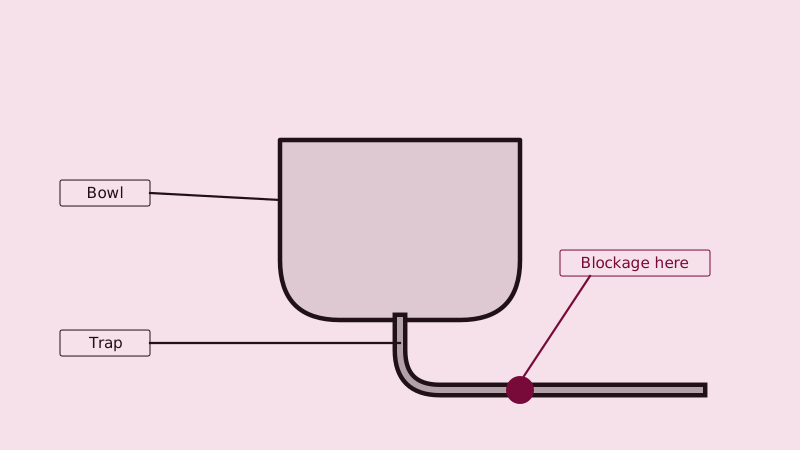
First keep the bowl from spilling over. Then work a flange plunger with firm, even strokes. When that does not do it, a toilet auger goes deeper; and if other drains are sluggish or the blockage returns, the problem is elsewhere. Wider drain-clearing advice lives on the clogged toilet page.
What is the quickest way to clear a badly blocked toilet?
Lift the tank lid and push the flapper shut, or turn the supply valve behind the bowl, so nothing more flows in. Press a flange plunger into the outlet until the rubber seals, then pump about fifteen strokes without lifting. A bowl that drops and swirls is cleared; flush once to test it.
Tool choice matters. Flat-cup plungers belong at sinks. A toilet wants the flange type, whose extra rubber collar fits the outlet. If the bowl is nearly dry, add water, because plunging moves water better than air.
Still stuck? Squeeze a generous amount of dish soap into the bowl, empty in a bucket of very warm tap water from hip height (never boiling, since porcelain can crack), give it twenty minutes and plunge again. Soap makes the clog slippery; the falling water pushes.
What if plunging changes nothing?
Reach for a toilet auger, a short cable with a bent tip built for the bowl's curved trap. Slide it in, turn the handle until it bites, push through or hook the obstruction and draw it back. Flush slowly once the level falls, and clean the auger and the rim.
A hardware-store drain snake can scar porcelain, which is why the sleeved toilet auger is the better buy. Wear gloves. If it stalls at the first bend, or you snag something hard like a toy, stop: removing it may mean lifting the toilet off the floor, which is a plumber's task.
Resist flushing again and again. Every flush may deliver another load of water over the rim.
Will baking soda and vinegar clear a toilet?
Seldom on a real blockage, since the fizzing is gentle and most of the effect is lost in a full bowl. A slow, mostly-paper clog may respond to it. Tip in a cup of baking soda, follow with two cups of vinegar, leave it half an hour, then follow with hot water.
Try it before plunging, not after, and never mix it with store-bought chemical cleaners, because the combination can release harmful fumes. Caustic openers are a bad idea in toilets anyway: they attack old fittings and seals, and a bowl that stays blocked is then full of caustic water for whoever fixes it.
Mild methods suit paper. They fail against wipes, toys, hygiene products or buildup lower in the line.
Why does the same toilet keep clogging?
Usual suspects: excess paper, wipes sold as flushable, hygiene products, a half-closed supply valve weakening the flush, a worn flapper that leaves the tank under-filled, a blocked vent, or a restriction down the line such as roots or a sagging section of pipe. Where and when it happens narrows the list.
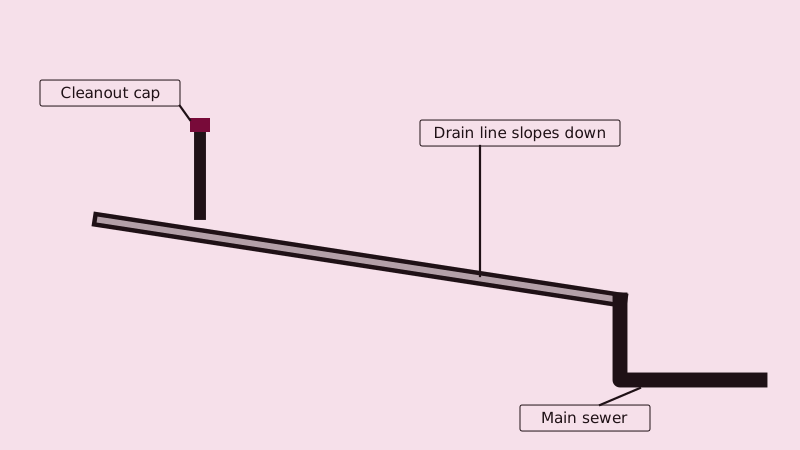
One toilet alone points to its own bowl, trap or flush. Water surfacing in a shower or tub when you flush, or several fixtures gurgling, points to the shared drain, and that calls for drain cleaning with a machine and sometimes a camera.
In houses with clay or cast iron lines, roots and scale can choke the drain gradually. Postwar tract homes are common in Downey, Norwalk, Pico Rivera and Paramount, and a plumber can scope a drain to see its condition. Hydro jetting, which uses pressurized water to scour the line, is one option for stubborn buildup.
Weak flushes sometimes trace to a tired flapper, which the EPA suggests changing at least every five years; toilet flapper repair walks through it.
Where does DIY end?
Hand over the job when water keeps rising after the valve is shut, other fixtures are involved, sewage shows in a shower or floor drain, an object is lodged, or the clog is back within days. Those clues suggest the main line or a hidden obstruction.
Sewage carries health risks. Keep kids and pets out, wear gloves and disinfect surfaces afterward. A house-wide backup should never be fought with chemicals; gurgling and slow drains everywhere mean the main line needs inspection.
Most clog work stays under California's contractor-license line of $1,000, though a plumber brings the camera and machine you lack. Typical prices are discussed in plumber to unclog toilet cost.
For a visit, fill in the price request and a local plumber arranges a time. Other jobs are on our home page.
What comes after the water finally drains?
Flush once or twice to confirm the flow is normal, and watch for a slow refill or a weep around the base. Disinfect the floor and any surfaces that were splashed, and wash the plunger. Then ask what caused it, since habits repeat.
Only paper and waste belong in the bowl; wipes, cotton and paper towels go in the bin. If the flush is feeble, rim jets may need descaling or the fill valve may need adjusting. Weak flushes have their own page, toilet flush repair, and basins are handled in unclogging a bathroom sink.
Common questions
Can boiling water be poured down a clogged toilet?
No. Boiling water can crack the porcelain. Use hot tap water, about as hot as you can comfortably touch, poured slowly from waist height after adding dish soap. That gives enough force and heat to loosen many clogs without risking the bowl.
Will a slow clog clear on its own?
Sometimes a slight clog drains slowly over hours as paper breaks down, but waiting is risky if the bowl is full. Close the supply valve and avoid flushing. If the level does not drop after a few hours, plunge it. A repeat blockage points to something deeper.
Why does the toilet gurgle when another fixture drains?
Air and water are moving through shared lines, and a partial blockage or vent problem pushes air back through the nearest trap. It suggests a blockage in the main or branch drain, not just the toilet. Stop heavy water use and call a plumber to inspect the line.
Can a plunger or auger harm the bowl?
A flange plunger is gentle. A toilet auger with a rubber guard is designed for porcelain, but forcing it can scratch the bowl. A standard snake, a coat hanger or a stiff wire can scratch the finish and push the blockage deeper, so avoid them.
What stops a toilet from clogging again and again?
Flush only paper and waste, use less paper per flush, avoid wipes, make sure the flush is strong and the flapper seals, and look at the drain if it keeps blocking. A plumber can camera-inspect the line to look for roots, scale or a low spot that catches paper.