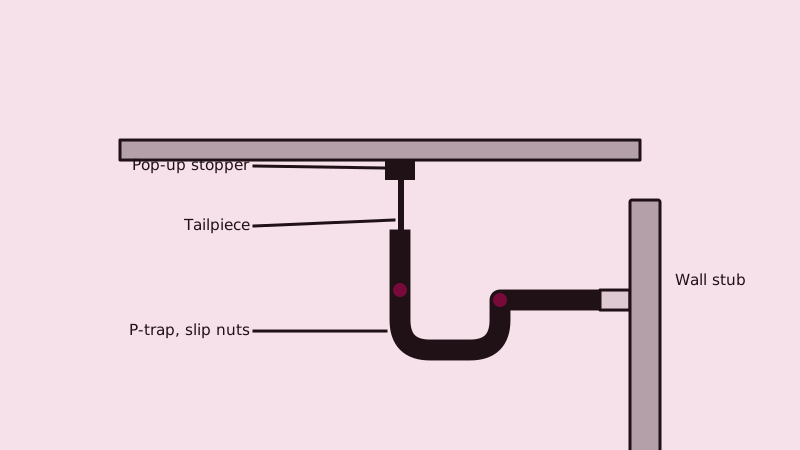
Debris gathers in three spots: the stopper, the short tailpiece under it and the bent trap below the basin. Clear them in that sequence and most bathroom sinks drain freely again. A basin that stays full afterward has its blockage farther down the line, which drain cleaning and clogs discusses from the plumber's side.
Where does a bathroom sink clog usually form?
Close at hand: first at the pop-up stopper, where hair snags on the pivot rod, then in the trap, where soap scum cements debris into a plug. Only occasionally does it form deeper in the wall. A drain that is merely slow suggests a partial plug high up, whereas a basin that stays full implicates the trap.
Hard water worsens soap scum, because soap reacts with dissolved minerals into a sticky film. Whittier's city water averaged 250 mg/L total hardness in the 2025 report, which counts as hard, so households on that supply may see scum accumulate faster than elsewhere.
Gather supplies first: rubber gloves, a flashlight, a bucket, old towels, a barbed plastic hair snare, a cup plunger, an adjustable wrench or tongue-and-groove pliers and, for a chrome trap, masking tape to protect the finish.
How do I clear the pop-up stopper?
Plenty of bathroom sinks hide the clog in the stopper assembly. If the stopper lifts straight out, take it; if not, reach beneath the basin, back off the retaining nut on the horizontal pivot rod, withdraw the rod from the drain body and raise the stopper through the top. Strip off the wrapped hair, then reinstall.
Some stoppers twist off or are a push-down type with no rod; the manufacturer's instructions or a photo of the model will tell you which kind you have. Check that the pivot rod seats back into the stopper's slot when you reassemble, or the sink will not hold water. Hand-tighten the nut with a quarter turn, no more.
Feed the plastic strip down through the opening, draw it up slowly and peel off the hair caught on its barbs. Keep going until nothing more comes up, then chase it with a kettle-free flush of the hottest tap.
How is the P-trap removed and cleaned?
Position a bucket below, then spin both slip nuts loose, using fingers or a taped wrench. Drop the curved section, dump it, scour the inside with a narrow brush and look over the washers. Refit everything with washers seated and nuts snug, then let the tap run and feel each joint for moisture.
Go gently. Plastic nuts strip easily, and cross-threaded ones create leaks that never existed before. Slip the nuts onto the pipes before reconnecting, check that each washer's beveled edge faces its fitting, and tighten with fingers plus a modest extra twist. A drip calls for a slight further snug, not a wrench-driven crank.
Look into the wall stub when the trap is off. If you can see or feel a plug there, the snake or plastic strip can go in carefully. Never force a rigid tool, since an old pipe can split.
What is the correct way to plunge a bathroom basin?
Block the overflow opening near the rim with a damp rag, add water until it reaches over the plunger's rubber cup, and seat the cup squarely on the opening. Pump hard roughly a dozen times without breaking contact, then lift off. If the water leaves, you have won; follow with a minute of hot tap.
A sink with two drains, or a vanity with a connected overflow, needs every opening sealed or pressure escapes. Use a small cup plunger sized to the drain rather than a toilet plunger, which has a flange meant for a different job. Stop if you smell or see anything that suggests a chemical was recently used in the drain, since plunging can throw it back at you.
What if the stopper and trap are not the problem?
Once both are spotless and the sink still crawls, or the toilet next door gurgles, the plug lives in the branch drain or the main. A hand snake reaches some of it, but roots, grease and damaged pipe need a plumber with a camera or power machine.
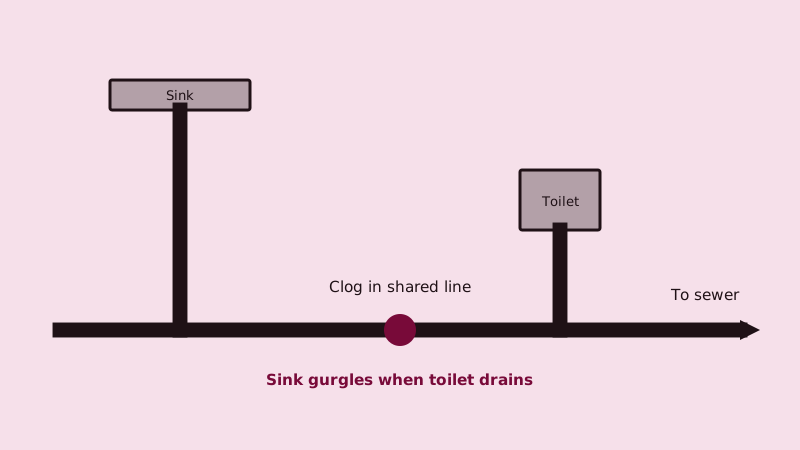
Plenty of southeast Los Angeles County houses were built in the 1950s and 1960s; Census data gives median build years of 1957 for Norwalk and Pico Rivera and 1960 for La Mirada. Cast iron or clay drains of that age can be rough inside, so repeat clogs deserve a camera look. Borderline cases are on slow-draining bathroom sinks, and the do-it-yourself options are weighed in remedies you can try at home.
Steer clear of chemical drain cleaners in any sink you may need to open later. They can attack pipes and fixtures, burn skin and leave the next person with a hazard.
Which signs say it is time for a professional?
Call when water still stands after plunging and a clean trap, when other fixtures are sluggish, when a tub or toilet nearby gurgles, when sewer odor appears, or when the same sink plugs again within days. Each of these means a blockage beyond hand-tool reach.
Send the price request form naming the fixture, what you cleaned and how long this has gone on. Someone local gets lined up to price it ahead of the work. For a recurring clog the plumber may suggest a camera or hydro jetting, and asking what that costs up front is fair.
Common questions
How long does the whole job take?
Stopper cleaning and a plunge normally take about fifteen to thirty minutes, and pulling the trap adds roughly half an hour with cleanup. A snake into the wall stub adds more. If both stopper and trap are done and drainage is still poor, spend the next hour arranging a plumber.
What belongs on my question list for a plumber?
The tools they will bring, any minimum or trip fee, whether a camera inspection is thrown in if the clog returns, and what the price covers. On bigger jobs, run the contractor license through the CSLB lookup, and ask for the number on paper before they start.
Does anyone have to be there?
Yes, an adult able to open the door and agree to the work. Empty the vanity cabinet, clear toiletries off the counter and shut pets out of the bathroom. Mention other slow fixtures so they can be checked in the same trip.
Is boiling water safe to pour in?
Better not. A kettle's worth can crack porcelain and loosen PVC joints. The hottest tap water dissolves light soap and grease just as well. A basin that holds standing water will not be helped by hot water alone, so move on to the plunger or trap.
For the wider picture, start with Rio Hondo Plumbing.