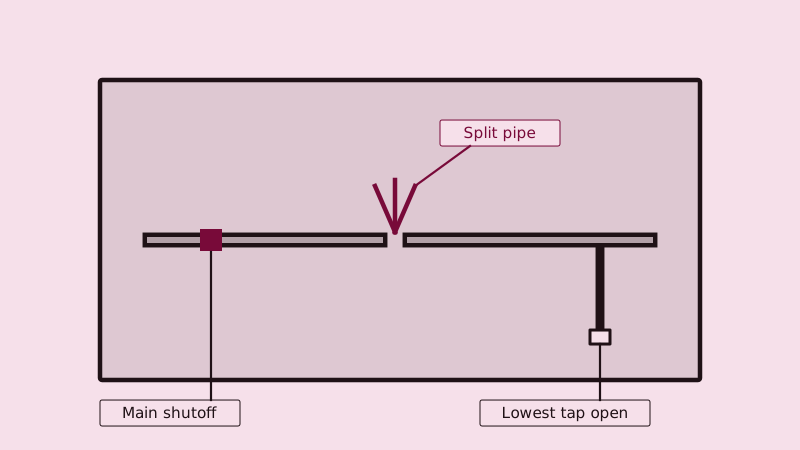
Work through this sequence: close the incoming supply, kill electricity to wet areas if the panel is reachable and dry, let the pipes drain at their lowest faucet, then ring a plumber and start taking pictures. The first three halt the flooding and the fourth protects a later insurance claim. Background on the topic sits in leaks and burst pipes.
What happens in the first five minutes?
First comes the house valve, typically on the wall the supply pipe comes through or beside the heater. Second, electricity: when the panel is dry, turn off breakers for soaked rooms. Third, relieve the system via the faucet nearest the floor, then carry valuables to a dry spot.
A ceiling that bulges can collapse, so keep clear. Where no wiring or fixture is nearby, a small puncture at the lowest point over a bucket lets the water out gradually instead of all at once.
Hot lines scald, so shut the heater down as well (gas dial to pilot or off, or its breaker). Left on, the tank keeps feeding the break. For a sense of scale, the EPA puts yearly waste from routine household leaks above 9,300 gallons, which one burst can match in a day.
Gas odor at any stage means leaving the house, then reaching SoCalGas on 1-800-427-2200 from the yard or street. Danger to people means 911.
Whose pipe is it, and who gets the phone call?
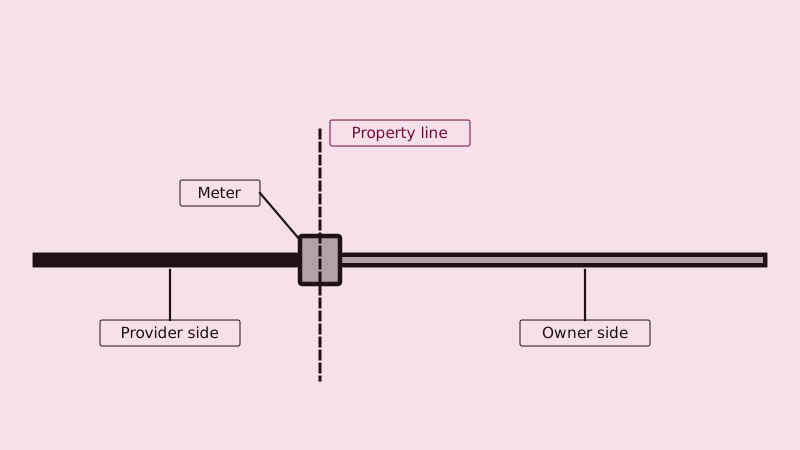
Typically the utility handles the street main as far as the meter, and the homeowner handles every pipe past it. Bubbling in the street or a leaking meter box goes to the supplier. A break in the yard, slab or walls goes to a plumber. Your supplier can confirm where its responsibility ends.
Your bill names the supplier, and that varies by street here. Whittier runs a city system (customer service (562) 567-9530), yet other companies cover pockets nearby. Golden State Water serves portions of Artesia, Cerritos, Downey, Hawaiian Gardens, La Mirada, Norwalk, Santa Fe Springs and Whittier (1-800-999-4033). Pico Rivera's water division answers at (562) 801-4316, Paramount's at (562) 220-2010, and the La Habra Heights County Water District at 1-562-697-6769.
Unsure who supplies you? Check a recent statement.
What evidence should you gather before cleaning up?
Photograph the broken pipe, wet floors, stained walls and damaged belongings, near and far, before anything is moved. Keep receipts for emergency work, set the broken pipe piece aside if you can, and jot down the times you found the leak and closed the valve. Tell your insurer soon after.
Coverage is not uniform. Policies generally distinguish a sudden discharge from a slow leak or wear, and the broken pipe itself may sit outside cover even when resulting damage is included. Ask the adjuster what they need to see, and hold wet materials until they approve disposal. For more on how this tends to go, read does insurance cover a burst pipe.
How do you keep the damage from spreading?
Clear standing water with a pump or wet vac, lift rugs and furniture, then run box fans and a dehumidifier with windows cracked when weather allows. Soaked carpet padding rarely recovers. Drywall that stays wet past roughly two days commonly gets removed, since mold starts in that window.
Order counts: water removal now, demolition after the pipe is mended. Drying a house that is still taking on water achieves nothing. If water may have entered a wall cavity, ask the plumber to scan with a moisture meter before anyone closes it up. A separate walkthrough of the aftermath is at water damage from a burst pipe.
Is a temporary patch acceptable?
On a visible pipe, yes: a repair clamp or a slip-on coupling can hold until help arrives, provided the water is off and the surface is dry. Pipe inside walls, main lines and anything carrying gas belong to a contractor.
Think of a patch as a bridge. Tired copper and galvanized steel frequently split again next to the repair, so the real fix means trimming back to healthy pipe and replacing that section. Legally, a California contractor license is needed once a job hits $1,000 in labor and materials or needs a permit.
What does the repair visit involve?
Expect the plumber to find the failure, isolate it, remove the bad stretch, fit new pipe and joints, and test the line under pressure. On older systems, the visit often turns into a conversation about replacing more pipe, which is when repair and repiping are compared side by side.
Questions to expect: pipe material and age, earlier leaks, and your water pressure. Supply pressure above 80 psi breaks the state plumbing code, and a regulator that has drifted can contribute to splits, so a gauge reading is routine. An easier-to-turn main shutoff is a cheap upgrade worth asking about.
Larger replacements need a permit, which the plumber normally arranges with the city; Whittier's Building and Safety Division is on (562) 567-9320. If breaks keep coming, repiping a house is the longer-term answer, and fixing a leaking water pipe deals with smaller failures.
What should you say when you phone?
Open with "burst pipe," then say whether the valve is closed, give your address and a number you will answer, mention the pipe material if known, and flag any risk to people. Photos help. Begin with a price request and a local plumber arranges the visit.
Our home page shows the other services, among them emergency help for a burst pipe.
Common questions
How soon does a burst cause lasting harm?
Hours rather than days. Drywall and insulation soak fast, and mold can start within a day or two of wetting. Close the main right away and begin drying. Waiting with the water still running turns a pipe repair into a full restoration project that costs far more.
Who covers the flood damage?
That turns on your policy and the cause. Insurers commonly pay for sudden water damage but not the pipe itself, and often exclude slow leaks and wear. Call your insurer before work begins and keep every photo, receipt and note of the timeline for the claim.
When is it safe to restore the water after a patch?
Only once the patch is secure and dry. Reopen the valve slowly with a nearby tap running to purge air, then watch every joint for several minutes. Any weeping means closing the valve again. Treat the patch as temporary and have a plumber inspect it.
Is this an emergency or can it wait?
Until the water is off, treat it as one. With the main closed and nothing spraying, a prompt scheduled visit is often enough, though active flooding, water near the electrical panel or a ceiling holding water call for the fastest response available.
Does the repair need a permit?
A small fix on an accessible pipe usually is not, while replacing longer runs or rerouting pipe often is. The plumber should know local rules and file for it. If in doubt, ask the city building division; Whittier's is at (562) 567-9320.
References
- EPA WaterSense, Fix a Leak Week (leak volumes)
- SoCalGas, cities served and emergency line
- City of Whittier, new resident information (water customer service)
- Golden State Water, Central Basin East service area
- City of Pico Rivera, water division
- City of Paramount, utilities
- La Habra Heights, resident information