Often in part. Standard California homeowners policies tend to cover sudden, accidental water damage and to leave out wear and tear and slow seepage, and they may pay for the resulting mess while excluding the cost of fixing the pipe. Your own policy wording decides, and only your insurer can confirm it. The plumbing side is covered in leaks and burst pipes.
What part of a slab leak might a policy pay for?
The cause drives the answer. A sudden failure under the slab that floods rooms may bring covered damage to flooring, walls and contents. A leak that crept along for months is typically treated as gradual and excluded. The failed pipe, as a wear item, is commonly left out even where the damage it caused is paid.
Wording differs between insurers, so take this as general information rather than advice on your claim. Look in your policy for terms like "sudden and accidental discharge," "continuous or repeated seepage," "wear and tear," and any wording about the cost to access the pipe. One consumer site notes that a common threshold for gradual seepage is 14 days, though each policy sets its own.
Flood and sewer backup are separate matters and often need endorsements. The same goes for mold, which many policies limit or exclude.
Does the policy pay for the repair or just the fallout?
In the usual pattern, the fallout may be paid and the pipe repair is not, since wear is an excluded cause. Some policies add language that covers the cost to tear out and replace parts of a building to reach a leaking pipe, which can include breaking the slab. Whether yours does is in the policy text.
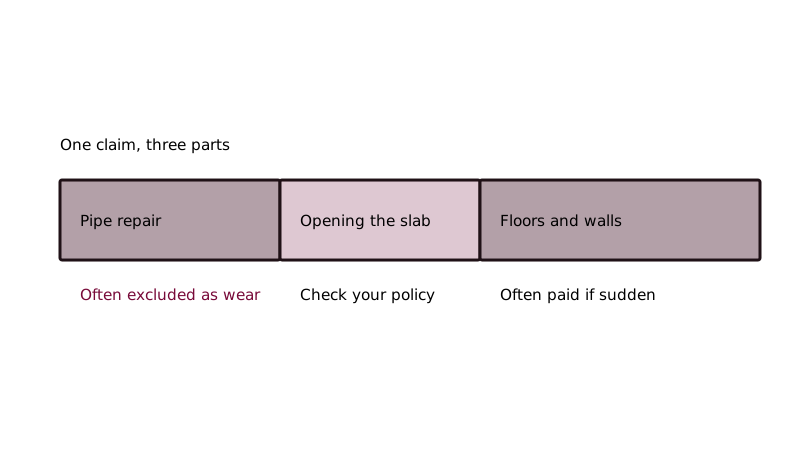
That distinction matters for cost. A slab leak job has two parts: finding and fixing the pipe, and restoring what was opened or soaked. Ask your insurer in writing how each part is treated, and get answers by section of the policy, not by phone impression. A plumber's quote that separates repair from access makes it easier to match the policy's categories.
For plumbing prices, slab leak repair cost lists published ranges, while slab leak repair or repipe weighs a single-line fix against bigger replacement.
What evidence should you collect before the plumber starts?
Photograph the damage, the meter reading, any warm spots or wet flooring, and your recent bills. Save the plumber's written report showing where the leak is and the cause. Keep any pipe section removed. Do not discard wet materials until the insurer has inspected them or released them in writing.
Write a short timeline: when you noticed symptoms, when you checked the meter, when you closed the main, when the plumber came. Policies usually require notice "as soon as practicable" or within a stated window, so tell your insurer early, even before you know the final repair. Emergency steps to limit further damage are typically expected, and receipts for them are worth keeping.
Ask the plumber for the pipe material, the failure type (pinhole, joint, corrosion, impact) and whether pressure was in range. The California Plumbing Code limits pressure to 80 psi, and a report that records yours is useful context.
Why is a slab leak harder to claim than a burst pipe?
Because it is hidden. A burst in a wall shows up fast, which supports a sudden-loss argument. A slab leak may run quietly for weeks before a warm floor, damp carpet or a high bill reveals it, and an insurer may argue the leak was gradual. Evidence of when you first noticed it, and what it was like before, carries weight.
Policyholder-side sources say the same facts can be argued both ways: a leak concealed under a slab can support a sudden-loss claim precisely because nobody could have discovered it earlier. Those are advocacy views, not rules. What you can do is document clearly.
Keep your water bills for the past year. A sudden rise on one bill, with older bills flat, tells a story. Reading the meter, then again after a quiet period, as the EPA suggests, adds a dated record that water is escaping.
What should you ask your insurer?
Ask whether a slab leak is covered under your policy, whether the cost to access the pipe is covered, what counts as gradual, whether you have a deductible for water damage, what documents they need and what the timeline is. Request every answer in writing, and ask whether you may pick the plumber.
Do not let someone else's estimate rush you. You can get your own plumber's quote and compare. If the insurer denies the claim, you can ask for the reason in writing and request a review. The California Department of Insurance operates a consumer hotline at 1-800-927-4357 and an online complaint process for disputes.
Not every disagreement needs outside help. Sometimes a clearer plumber's report, which spells out when and how the failure occurred, resolves a question about wear versus sudden failure.
When should you call a plumber before calling the insurer?
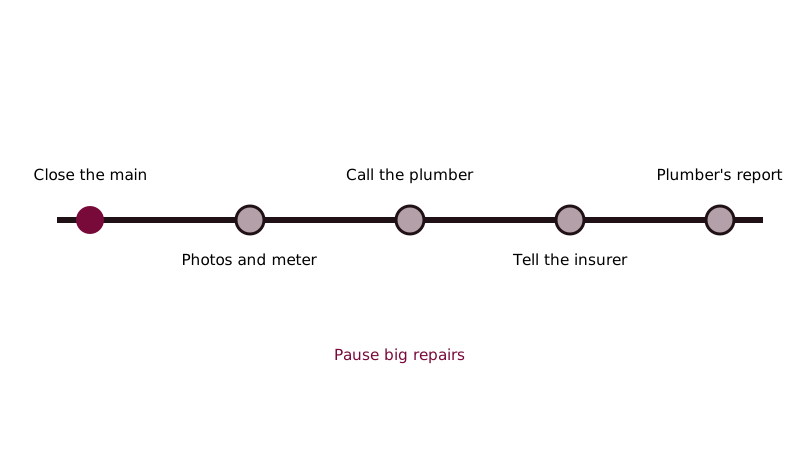
Call both, in this order: stop the damage first. If water is flooding, close the main and call a plumber, then tell the insurer the same day. If you only suspect a leak, run the meter test, then call the insurer and a plumber. Hold off on large repairs until the policy position is clear.
A plumber pinpoints the leak, names the cause and prices the fix. Contractor licensing matters here: California requires one for work at or above $1,000 in labor and materials, or work needing a permit. To get a visit started, use the price request. More of what we arrange is on the home page.
Once the claim question is settled, see how to compare slab leak repair companies before you book.
Common questions
Does homeowners insurance cover the cost to break through the slab?
Some policies cover the cost to access a leaking pipe, including breaking and repairing flooring or slab, even when the pipe itself is excluded. Others do not. This depends on policy wording, so ask your insurer which section applies and get the answer in writing.
Is a slow slab leak ever covered?
Gradual leaks and seepage are typically excluded, and policies often set a time threshold. Some people argue a concealed leak could not have been found sooner, but insurers may disagree. Evidence of when it started, such as bills and a plumber's report, shapes the outcome.
Could a claim change what I pay next year?
It can, but this varies by insurer and claim history, and we cannot say how it will affect yours. Ask your insurer how a water claim is recorded, and compare that with the repair cost before deciding whether to file. Some people pay small repairs themselves.
What is the deadline for reporting?
Many policies call for prompt notice, often worded "as soon as practicable," and some define a window of their own. Tell the insurer soon after discovery, even before the full scope is known, because waiting can complicate a claim and the clock may already be running.
Who can I call if my claim is denied?
Begin by requesting the denial reason in writing. After that, the state Department of Insurance runs a consumer line (1-800-927-4357) and posts a complaint form online. Keep the plumber's written report, your photos and your bills; they are the evidence behind any review.