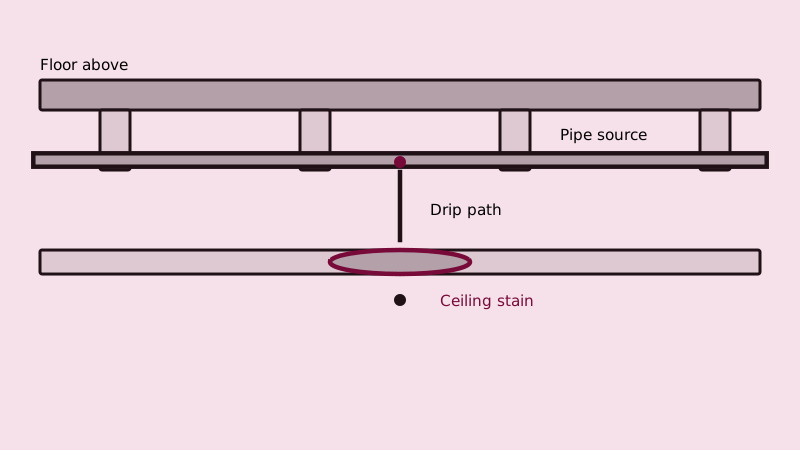
A wet ceiling runs on two clocks. One is safety: sagging plaster, wet wiring. The other is damage: soaked insulation, mold that starts to take hold. So the order is people first, power second, water third, and detective work fourth. The broader topic of tracking down leaks lives under plumber for leaks, and the emergency steps follow here.
What should happen first once the ceiling starts to drip?
Get everyone out from under the stain. If wet fixtures or outlets sit near the drip, flip that room's breaker off. Put a bucket down, move furniture, and take photographs before touching anything. When the source is unknown, closing the main water valve tells you a lot: if the dripping slows, the supply side is involved.
Practical points:
- A ceiling that bellies down is carrying a load of water and can let go without warning. Do not poke or puncture it yourself, since wiring or a light fitting may sit in that patch. Call a professional.
- A wet light, fan or outlet stays off.
- Fans and open windows come after the electrical question is settled.
- Lift soaked rugs so floors do not drink the water.
Wet wiring is serious. If you cannot tell which circuit feeds the area, leave the main breaker off and ring a plumber or an electrician.
How do I separate a pipe leak from a roof leak?
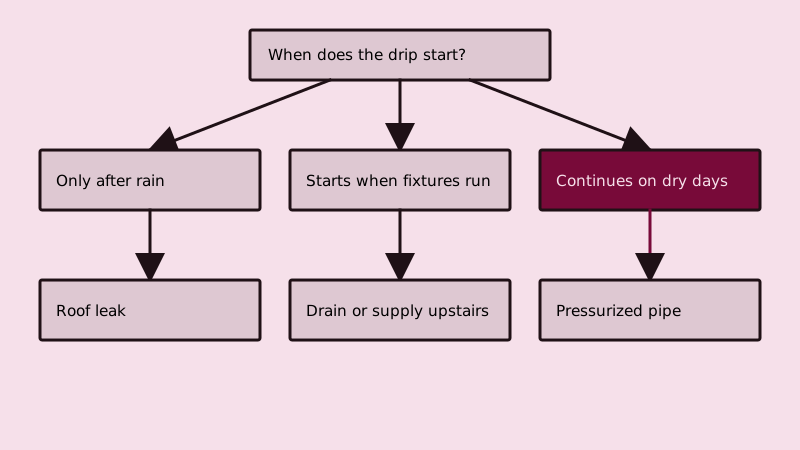
Watch for patterns. Stains that appear only in or after rain blame the roof. Drips that start when someone showers, flushes or runs the dishwasher blame a drain or supply upstairs. A leak that carries on through dry days points to a pipe under pressure. Closing the main and watching what the drip does is a quick test.
Water meters help too. Turn every fixture off, then watch the dial: a dial that creeps round signals a leak somewhere downstream, consistent with a pressurized line. Signs a pipe has burst lists what a real failure looks like.
Other suspects are a clogged air conditioner drain line, sweating on a cold pipe, and a worn shower pan in the bathroom overhead. Look at the room directly above the stain before anything else.
Is a faint stain or slow drip a real concern?
Yes. A small leak is an early large leak, and a stain says water has been up there a while. It soaks insulation and drywall and leaves a patch that dries and comes back. Treat each new stain as active until someone shows the source is repaired. A patch hides the problem without solving it.
By the EPA's count, a typical household loses more than 9,300 gallons yearly to leaks. Ceiling leaks usually announce themselves sooner, yet a pinhole hidden in a wall can weep for months before anything shows.
Hold off on painting. Paint on damp drywall blisters and seals moisture in. A stain that returns once dry tells you water is still arriving.
Can a ceiling leak cause mold, and how fast?
It can, and the clock is short. The EPA's advice is to dry anything water-damaged inside 24 to 48 hours, before mold can start. Porous items, ceiling tiles among them, may have to be discarded once mold takes hold. For large areas or contaminated water, the EPA points to professionals.
Dry with fans, pull out wet insulation, and watch for a musty smell or dark speckles. A dehumidifier speeds things up. If the water came up through a drain or from a sewer line, it counts as contaminated, so keep people and pets away until it is handled. Dark growth across a large patch is a remediation job, and the EPA's guidance covers when.
Does it change if this is a basement ceiling or an apartment?
Below a first floor, the cause is usually a supply or drain line running between joists, and bare framing makes tracing easier. In an apartment the pipe above is the owner's or the neighbor's, so report it to the property manager by email or letter with dates and photos, and stay out of the unit overhead.
Shared plumbing is common in this region. Census estimates put about 6,500 of Bellflower's 24,683 housing units in buildings of ten or more units, for example. A plumber hired by the building owner is the right person to trace a shared line.
If a landlord stalls, the city or county housing office can explain a tenant's options. Contents coverage is a separate matter, so ask your own insurer.
And if a pipe really has burst overhead?
Shut the main first. A split in a reachable pipe can be fixed quickly: the bad stretch is cut out and new pipe fitted. Opening the ceiling and drying everything out takes longer, and the total depends on pipe type, access and how far the water traveled.
PEX can split after a freeze, copper can pinhole, and old galvanized steel tends to fail at the joints. Once supply is restored, drywall and insulation repair wait until things dry. Background reading covers causes of bursts and repairing a burst pipe.
Cover depends on the cause; read insurance and burst pipes and keep photos and receipts.
Which trade do I phone, and what will it cost?
A plumber for pipes, a roofer for the roof, an HVAC technician for a condensate line, and a drywall contractor for the ceiling afterward. Unsure which one? Start with a plumber to rule the pipes in or out, because that is the quickest way to narrow the search. A flood is an emergency call.
We print no prices because a ceiling leak might be a ten-minute fitting or a hidden pipe behind finished drywall. The page on leak detection costs explains how hidden leaks get located. Send a request through the price request form; note where the stain sits and how it looks.
Common questions
Which leak shows up most often around a house?
The EPA names silent toilet leaks, often from a worn flapper, among the usual household leaks, along with dripping faucets and showerheads. Ceiling leaks are rarer but more expensive since they hide in floors and walls. When a ceiling is wet, inspect the room above it first.
Can I stay in a room with a wet ceiling?
Not under the stain. Soaked ceilings can drop, and wiring above may be wet. Cut the circuit at the panel, keep children and pets away, and if the ceiling sags or the flow is heavy, leave the room alone until someone qualified has dealt with it.
May I patch the ceiling right away?
Wait. A patch over wet drywall locks the moisture in and the stain returns. Dry the area, repair the pipe or roof, then patch and paint, in that order. If a stain reappears after repairs, something is still leaking and needs another look from whoever did the work.
Will my water bill reveal a hidden leak?
Often it will. A pressurized leak adds to usage, although a slow drip can vanish inside a normal bill. If the bill climbs without any explanation, this guide to a high bill without a visible leak lists the checks to run.
What should I tell you for a quote?
Say where the stain is, when it drips, whether rain or water use changes it, for how many days it has been going, and what you have done already, and attach photos. Mention any apartment or second floor overhead. Our other services start at the home page.