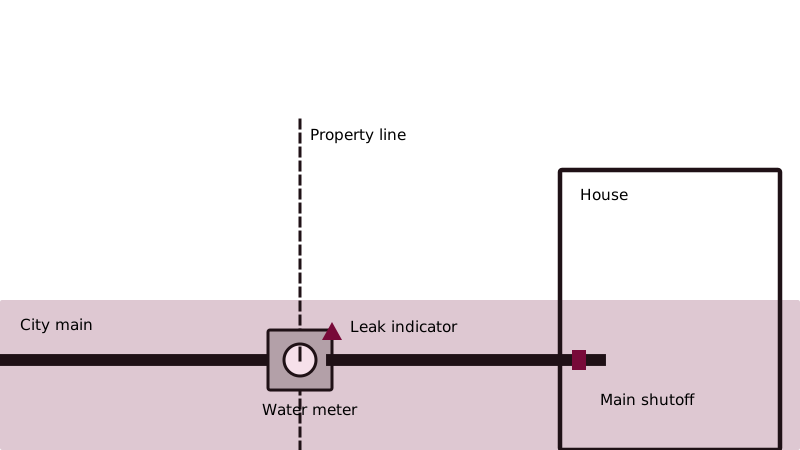
Three things give a burst pipe away: water showing up where none belongs, a hiss or drip sounding inside a wall with every faucet shut, plus a meter dial still creeping round when nobody is home. See any of the three? Close the house supply valve first and ask questions later. For repair options, leaks and burst pipes is the place to start; here we only diagnose.
Does the water meter prove a pipe has burst?
It proves water is escaping, which is the part you need to know first. Shut every faucet, stop the dishwasher and washer, jot down the meter digits, and go out for a couple of hours. Come back and compare. Different digits mean water is getting away downstream of the meter, behind drywall, over a ceiling, or beneath the lawn. The EPA recommends this same check.
Most meters add a leak indicator, a tiny star or triangle that rotates with the slightest flow. If it spins while the house is quiet, there is your answer. The meter box sits near the curb or property line. Inside Whittier city limits the city runs the water system (customer service (562) 567-9530), but parts of the surrounding area buy from other companies, so check the bill for the name of the company to call.
For scale: the EPA puts annual waste from typical home leaks at more than 9,300 gallons, while one split in a live line can equal it within roughly a day.
Where should you look when the water may be under the floor?
If the house has a crawl space hatch, open it first. Sweep a flashlight along the pipes and joists hunting for drips, darkened soil or standing water. On a concrete slab the signals differ: a warm stripe underfoot, carpet that stays damp in one zone, or a hiss from the floor while the meter turns.
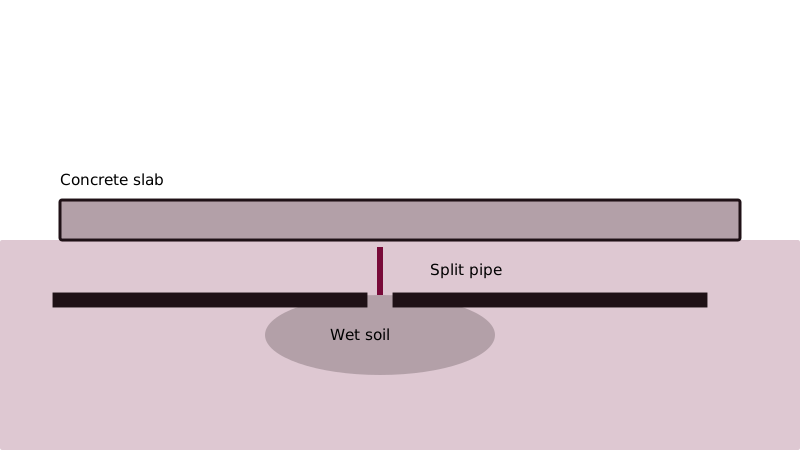
Postwar tract homes make up much of the housing in Downey, Norwalk, Pico Rivera and Paramount (Census figures put the median build year between 1957 and 1971). Houses from those decades sit on either a raised foundation or a slab. Pipe on a raised foundation can be inspected by eye. Pipe in a slab is buried, which lets a leak run quietly for weeks.
Do not enter a crawl space where water has pooled near wiring, and never one that smells of gas. Take pictures of what you find before touching anything; the plumber and your insurer will both want them.
How do you dry the house out after a burst?
Extract standing water with a wet vac or a small submersible pump, then move air through every damp room using box fans, cracked windows and a dehumidifier. Carpet padding and batt insulation seldom recover. Drywall wet for more than about 48 hours generally gets cut out, since mold can begin growing in that period.
Photograph the damage before you shift anything. Planning a claim? Hold on to a swatch of the ruined material until the adjuster has looked. Stand furniture feet on foil squares or wood blocks to stop stains spreading.
Drying is pointless while the broken line keeps feeding water in, so the repair comes first. Cleanup steps live in water damage from a burst pipe; the underlying causes are in what causes a pipe to burst.
What should you do right away once you are sure?
Close the main. Then open the lowest faucet you have (a hose spigot works) and let the lines drain. If water is reaching outlets or a light fixture, kill that circuit at the breaker panel, provided you can get there without wading. Water meeting electricity kills people. Turn the water heater off as well; a burner running over an empty tank is asking for trouble.
Typical homes hide the main near the front hose spigot, inside the garage, or by the heater. A round handle closes clockwise, while a lever needs only a quarter swing. A frozen-solid valve means going to the meter shutoff with a meter key (sold at hardware stores) or phoning the water company.
Stay clear of hot spray, which scalds within seconds. Should the house smell of gas at any point, walk outside before anything else, and phone SoCalGas on 1-800-427-2200 once you are on the sidewalk. If someone is at risk, 911 comes first.
Which visible and audible clues point to a burst?
A tea-colored ring that keeps widening overhead, baseboards gone soft, paint blistering, floorboards cupping, a puddle with no source, a smell like wet cardboard: these are the visual clues. After dark, with the TV off, press an ear against doubtful walls. Pressure that sags at every tap is the third clue.
Outdoors, a soggy strip of lawn when the sprinklers are off hints at the pipe that crosses the yard to the house. A bill that doubles with no change in routine deserves a meter test even if every room looks dry.
Burst versus leak is a matter of speed. A burst is a failed stretch of pipe letting go fast; a leak is a pinhole or loose joint that weeps. Either one ruins drywall, and the same checks find both.
Can a burst be patched without a plumber?
On an exposed pipe, a pipe repair clamp or a slip-on coupling can hold until help arrives. Anything behind a wall, the main line and all gas piping belong to a contractor. The legal limit: work totaling $1,000 or above, or work that triggers a permit, requires a California contractor license.
A clamp is a bandage. Tired copper often gives way again an inch down the line. If one run has now failed twice, ask the plumber about replacing it, and read up on pinhole leaks in copper, a typical culprit. Whole-house replacement is weighed on the repiping page.
High pressure shortens pipe life. the state plumbing code allows no more than 80 psi (section 608.2), and a drifting regulator can push beyond it. Thread a gauge onto an outdoor bib to learn yours.
Supply closed and you want it examined? Request a written quote and a local plumber arranges a visit. More services are listed on the home page.
Common questions
How do I separate a burst from a fixture drip?
Fixture leaks weep from one visible point (a trap, a braided supply hose, a faucet base) and the little stop valve beneath that fixture quiets them. A burst keeps pouring, usually with a hiss or a spreading stain, until the main is shut. Continuous flow is the burst signature.
Could a pipe split below the floor with nothing wet indoors?
Yes. Water from a split under concrete or in the crawl space can vanish into soil for a long time. Telltales include a meter dial that keeps turning, flooring that is warm, a damp odor and a bigger bill. Any one merits a phone call.
Does low pressure mean a pipe burst?
Not on its own. A partly shut valve, clogged aerators, a faulty regulator or trouble on the street can each weaken flow. Think burst when the loss is sudden, affects every tap, and comes with a damp spot, a hiss or a meter in motion. Then close the main.
What details help when you phone for a plumber?
Describe where the water is appearing, whether the main is closed, the pipe material if known, and if the house stands on concrete or a crawl space. Pictures plus the meter digits from your test help the plumber prepare for the visit and bring the right parts the first time.
How soon should a burst pipe be fixed?
As early as a plumber can get there. Wet framing and flooring keep absorbing moisture until the pipe is mended. Closing the main buys time, but drywall that stays damp invites mold, so say it is a burst when you call and the request is handled as urgent.