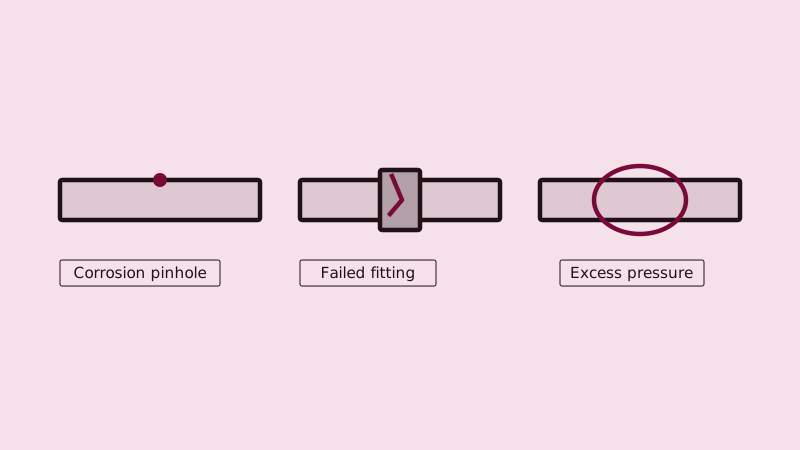
A pipe bursts when the pressure inside it beats the strength of the wall around it, and age, corrosion, high pressure, movement or a freeze are what lower that strength. In inland Los Angeles County the common culprits are old metal, overpressure and shifting soil. Symptoms and repair paths are laid out under leaks and burst pipes.
Why does a water pipe suddenly burst?
Because a weak spot finally lost an argument with pressure. Pipes thin from the inside as minerals and rust eat the wall, or they are stressed from outside by soil, framing or a bump. Then a pressure spike, such as a closing valve or a hot afternoon, tips a tired section into a split.
Four ingredients appear again and again:
- A thinned wall. Corrosion in galvanized steel or pinholes in copper.
- Excess pressure. Constant overpressure fatigues every joint.
- Stress. Settling slabs, shifting soil, tree roots and movement from earthquakes.
- A trigger. A pump start, a hammer shock or a freeze.
Because the wall often fails slowly, a burst can feel sudden when it was years in the making. Many homeowners look back and remember a damp spot, a stain or a bill that rose a few months earlier.
Is high pressure enough to split a pipe?
It can. House pressure tops out at 80 psi per the state plumbing code (section 608.2), and living above that wears out pipes, fittings and fixtures sooner; a sudden surge can finish a section that was already weak. A failed regulator is a textbook cause, since the creep goes unnoticed until something gives.
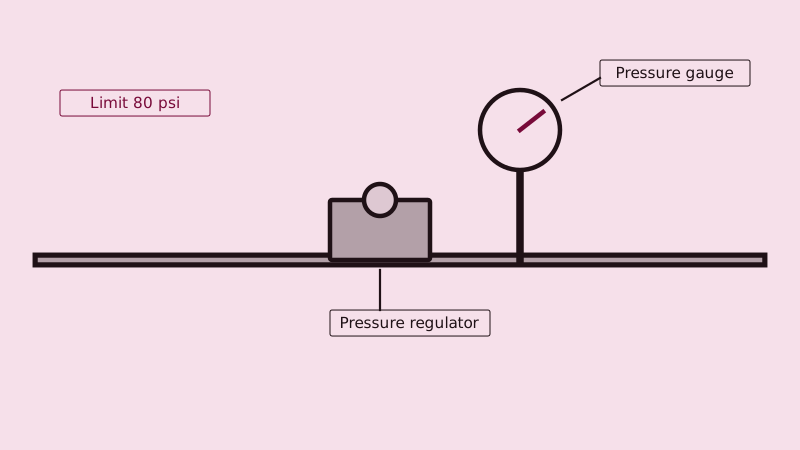
You can test it for a few dollars with a hose-bib gauge. If the needle sits above the limit, read how to adjust the regulator or ask a plumber to replace it. Banging when a tap shuts can be the same story in a louder voice; water hammer puts a shock load on joints and straps.
Does age and corrosion cause pipes to burst in Whittier?
Often, yes. Census data for the 2024 estimates show a median build year of 1959 in Downey and 1957 in both Norwalk and Pico Rivera, and That points to a good many postwar homes in the area. Homes of that age often have galvanized steel or early copper plumbing, and either can corrode or develop pinholes.
Water chemistry plays a part. City of Whittier water averaged about 250 mg/L total hardness in its 2025 report, a level the USGS puts in the very hard class. Hardness does not split a pipe by itself, but the USGS notes that scale buildup can narrow pipes over time, which adds strain. For aging steel lines, open galvanized pipe replacement, and a related failure, pinhole leaks in copper, gets a page of its own.
What makes a pipe split in cold weather, and in a hot summer?
Freezing makes ice expand and split the pipe, usually in unheated spaces, attics or exposed outdoor lines. Hard freezes are uncommon in Whittier, so winter bursts here usually mean an unprotected line on an unusually cold night. Summer bursts come from other causes: heat and soil movement, pressure surges, or an old fitting letting go.
In summer, dry soil shrinks and shifts around buried lines, and heavy irrigation can swing moisture around slab foundations. Warmth also pushes pressure up inside a sealed loop, for instance a water heater circuit with nowhere for the swelling to go. Neither is a freeze, which is why a summer burst is often a surprise.
For the rare cold snap, burst pipe prevention says what to wrap and which valves to locate.
Which signs say a pipe is leaking or about to fail?
Watch for a stain on the ceiling that keeps growing, paint that bubbles, a wall that feels damp or warm, a musty smell, the sound of flow when every fixture is off, or a bill that suddenly rises. A drop in pressure in one part of the house can also point to a failing line.
A few clues are easy to check:
- Read the water meter while the house is idle. A dial that turns means water is leaving somewhere.
- Inspect ceilings under bathrooms and the wall behind the heater.
- Press an ear against a suspect wall after dark, when the house is still.
- Feel for warm patches on a floor that might mean a hot line.
By the EPA's reckoning a typical home leaks over 9,300 gallons yearly, and a failing pipe is a worse version of that. If the bill climbs without a visible leak, that situation has its own guide. A stain overhead is covered under ceiling water leaks.
Which valve do I close first, and where should I look?
Shut the main water valve, typically close to the spot the supply enters the home or beside the meter, then let the lowest tap run dry. Power to wet zones goes off only if the switch can be reached without touching water. After that, check wall, ceiling and floor for the origin of the leak.
Photograph the damage. Mop and fan out what you can, since water damage worsens with time. Leak detection tools such as moisture meters and listening gear help a plumber trace a hidden leak without opening every wall; the page on what leak detection costs explains the options. If water is actively flooding, the quicker path is emergency burst pipe service.
When should I replace pipe instead of patching it?
Patch a single failure on a sound line. Replace when pipes fail repeatedly, when corrosion is widespread, or when the material is known for trouble. A second leak within months of the first suggests that a run, or the entire house, is due for new pipe. The trade-offs appear on the repiping page.
Ask the plumber what caused the failure, not only how to stop it. If pressure was the cause, a new pipe on a bad regulator will fail again.
How soon can someone look at my burst pipe?
Tell us what you saw through the price request form, including where the water is and if the main has been closed. A plumber who works nearby visits your Whittier-area address and gives a written price before the job begins. Photos and a meter reading are useful extras.
Other services are listed at the Rio Hondo Plumbing front page.
Common questions
Do pipes burst when the water is turned off?
Not usually from pressure, since turning the water off removes it. Bursts tend to happen when water is on, or after a freeze thaws and water starts moving. A pipe that split during a freeze can reveal itself only when the supply returns.
Do pipes ever burst with no warning?
It can look sudden, yet corrosion and fatigue usually leave hints first: stains, drips, shifts in pressure or a climbing bill. A line inside a slab or a closed wall can weep for weeks without notice; only the final failure seems abrupt.
Will insurance pay when a pipe bursts?
Plenty of policies respond to a sudden burst yet leave out slow leaks, and the failed pipe may sit outside cover. Terms differ, so read your own wording and call the insurer before major cleanup. Photos from before the repair support a claim.
How quickly should I respond to a burst?
Immediately. Shut the main, empty the lines and ask for help. Mold and water damage begin quickly, and a spraying pipe can cause serious harm to floors and walls in a short time. A convenient hour is not worth waiting for.
What type of pipe is least likely to burst?
None is immune. Flexible PEX tolerates a freeze more gracefully than rigid pipe does, and copper can last a long time in the right water. Still, pressure, installation quality and water chemistry count for more than the label, so let a plumber suggest a material for your house.
References
- EPA WaterSense, Fix a Leak Week
- California Plumbing Code, section 608.2 (80 psi limit)
- USGS, Hardness of water
- City of Whittier 2025 Consumer Confidence Report (State Water Board)
- US Census ACS 2024 5-year estimates, via Census Reporter