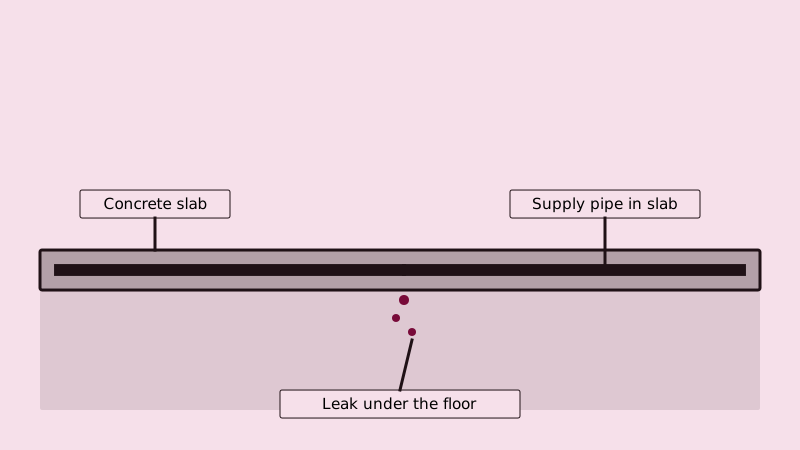
When a supply pipe leaks beneath a concrete floor, the fix comes in three sizes. Break out a patch of floor and splice that one stretch. Cap off the buried run and feed the fixtures from overhead. Or replace the supply plumbing throughout. Pipe age and the count of earlier leaks should steer you. Other leak types live in the leak repair hub, while the home page leads to a request form.
What is a slab leak, and why do postwar houses get them?
The term means a pressurized supply line leaking inside or beneath the concrete foundation. A lot of mid-century tract houses were poured on slabs with copper lines embedded below, and after decades those lines can pit, chafe against gravel or let go at a solder joint. Median home age is 1957 in Norwalk and Pico Rivera and 1959 in Downey, so this is a real local concern.
Plenty of older homes never have one, and one leak does not condemn every pipe. Water chemistry, shifting soil, bedding and pressure all contribute. High pressure strains each joint, and California Plumbing Code 608.2 caps it at 80 psi. Because homes differ, find the cause before picking a repair.
What are the warning signs under the floor?
Four tell-tale signs: a bill that rises though nobody changed habits, a slab that feels oddly warm, a faint rush of water while every tap is closed, and carpet that stays damp along a wall. Confirm at the meter: copy down the dial, hold off on all water use for 120 minutes, then look again; EPA says movement on the dial suggests a leak.
More clues:
- A water heater that fires constantly, or hot taps that sit cold for ages. A broken hot line can warm the concrete above it.
- Pressure sagging without an obvious cause.
- Hairline cracks, wet baseboards or mildew smell at floor level.
- A wet patch in the yard beside the foundation, which may mean the break is outdoors.
A slow one may reveal itself only on the statement. Rule out other causes with the reasons a water bill spikes and bills with no visible leak.
How is the leak found without tearing up the house?
The usual order is a pressure test on each line, then acoustic listening gear dragged across the floor, then thermal imaging or tracer gas if the sound is unclear. The aim is to mark a spot within a foot or so, so the cut in the floor is small. A bad survey means a wider hole and more repair.
Question whoever does the search about the method, whether the spot gets marked and noted on paper, and whether hot and cold lines are tested apart. The answers show if you have a single leak or a sign of system-wide decline. The leak detection cost guide prices the search by itself.
Patch it, bypass it or replace it all?
A spot repair fits a first leak in an otherwise healthy line: break the slab, replace a section, patch the concrete. Rerouting abandons the failing run and installs a new one overhead. Repiping swaps most of the supply plumbing. With each additional leak, the last two grow more attractive.
How they compare:
| Option | Best when | Trade-off |
|---|---|---|
| Spot repair under the slab | One leak, pipe otherwise fine | Floor cut and patched; another leak may follow |
| Reroute through walls or attic | A single buried run keeps failing | Drywall openings and patching |
| Whole-house repipe | Several leaks, old pipe, corrosion | Biggest job, but the old supply system is gone |
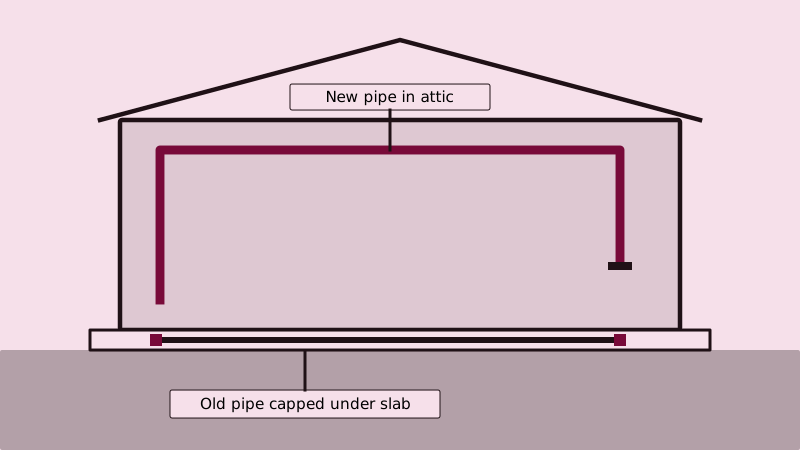
Rerouting leaves the old pipe capped under the floor. The slab stays whole, but walls and ceilings take the damage. Thinking bigger? See why repipe a house and our repipe house page.
How should a slab-on-grade home be repiped?
The new supply usually travels across the attic and drops through wall cavities, in PEX or copper, leaving the slab alone. Expect walls opened and patched over a few days, with a city inspection before they are closed. Have the permit details confirmed on paper.
Published numbers from Thumbtack show the scale. Materials alone run PEX at roughly 40 cents to $2 per foot against copper at $2.50 to $10, labor extra, and bids often land at $450 to $1,000 or more per fixture. That page also says a full repipe lasts three to five days. National figures like these are a guide, never a bid. Compare PEX and copper and PEX repipe pricing.
What affects the price, and who needs to approve the work?
Cost depends on whether the slab is opened, how much finish work follows, the pipe material and house size, and whether you need a permit. No verified Whittier slab leak price turned up, so none appears here. Request an estimate on paper itemizing floor cutting, patching, permits and exclusions.
Permit and license rules apply. California's contractor license law covers any job at $1,000 for labor and parts combined, plus any work that needs a permit. Get the number from the contractor and verify it through CSLB. In Whittier, permits go through the Building & Safety Division, (562) 567-9320. Older flooring such as vinyl tile or mastic can contain asbestos; ask whether anyone will test it before the floor is cut. See slab leak repair cost and whether homeowners insurance covers slab leaks.
If you decide to repair, the guide to slab leak repair companies covers what to ask before you hire.
Common questions
When will the floor look normal again?
Once the leak is pinpointed, a spot repair can take about a day, then the concrete must cure before the floor is finished. Rerouting or repiping stretches over several days; Thumbtack says three to five for a full repipe, with wall repair afterward. Access and inspection timing decide yours.
What questions come first when choosing a contractor?
Request the contractor's license number, the plan for locating the leak and an itemized estimate, and learn who files for the permit. Clarify whether finish patching is in the price, and who is responsible should another leak show up. Insist on a signed contract before a saw touches the floor.
Must someone stay at the house?
Plan to be present on day one, when the crew needs the shutoff pointed out, and whenever the city sends an inspector who wants an adult at the door. Keep pets and valuables clear. A repipe shuts the water off in stretches, so plan cooking and showers around it.
Does a concrete roof slab leak count too?
It does not. Water through a roof deck is an envelope or drainage matter for a roofer or waterproofing specialist, and has nothing to do with buried supply lines. A plumber can say whether any pipe is involved; if none is, look for the right trade.
Can I repair a slab leak myself?
Pinpointing one is beyond a household, and repairing one is not safe. Cutting through concrete can sever gas or electrical lines, and permitted repairs must go to a contractor. What you can do is close the water, record meter readings, photograph the damage and send it all to your insurer.