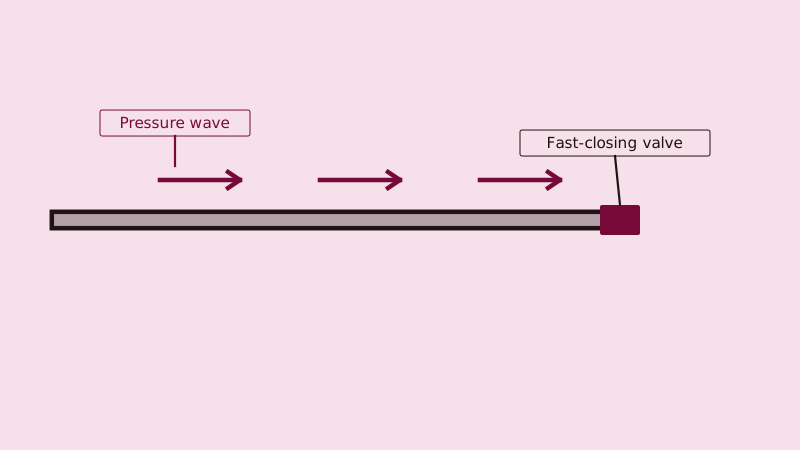
That thud or knock a second after a faucet, washer or dishwasher valve shuts is water hammer. A column of flowing water is heavy; stop it abruptly and it slams into the pipe wall. High pressure, loose straps and spent air chambers are the usual causes, and Rio Hondo Plumbing can send a plumber to track yours down.
Is every pipe noise water hammer?
One hard bang right after a valve closes is textbook water hammer. A buzz or chatter while water flows is a vibrating valve or loose pipe. A squeal can be a tired washer or fill valve. A tick that follows the heater cycle is probably pipes expanding in tight holes.
Match what you hear against this list:
| Sound | When it happens | Usual cause |
|---|---|---|
| One loud bang | The moment a faucet or appliance closes | Fast-closing valve, high pressure, empty air chamber |
| Repeated thumping | After a washing machine or dishwasher fills | Solenoid valve slamming shut |
| Rattle or knock on a timer | While water is running | Pipe strap loose, pipe touching framing |
| Squeal or whistle | While a toilet fills | Worn fill valve |
| Tick or creak | As the heater warms or cools | Pipes expanding in tight holes |
Location says more than pitch. A bang centered on the wall behind the washer implicates that appliance, while one that travels through the whole house suggests system pressure.
What actually happens inside the pipe when a valve shuts?
Fast water carries momentum, and a quick valve stops that flow almost instantly. The shock wave runs back up the pipe and knocks it against whatever sits nearby. A faster closing valve and a higher supply pressure both make the bang harder.
Four things usually stack up:
- High incoming pressure. The California Plumbing Code puts the limit at 80 psi (section 608.2), and a house running near it hammers more.
- Quick-closing valves. Washing machine, dishwasher and single-lever faucet valves all shut fast.
- Loose pipes. Straps that have worked loose let the pipe jump.
- Lost air cushion. Some homes have small air chambers or arrestors meant to soak up the shock. Once they waterlog, that cushion is gone.
The result can be startling enough that owners suspect something worse. If you worry about a burst line instead, signs of a burst pipe spells out the differences.
Is high pressure behind the noise, and how would I know?
Fit a gauge on an outside hose bib, check that every other tap and appliance is idle, and watch the needle. A steady figure near or over 80 psi is a likely cause. Most often a regulator has drifted or failed, and it can be tuned or swapped.
The tuning steps appear in adjusting the regulator, and regulator installation costs shows what a replacement project adds up to. If your gauge reads normal, pressure is not the cause and you should move on to the pipes and the valves.
What stops the banging for good?
Work from the cheapest fix to the costliest: lower excess pressure, recharge the air chambers, secure loose pipes, then install arrestors at the offending fixtures. Many homes need only one or two of these. A plumber can tell which, and some fixes take under an hour.
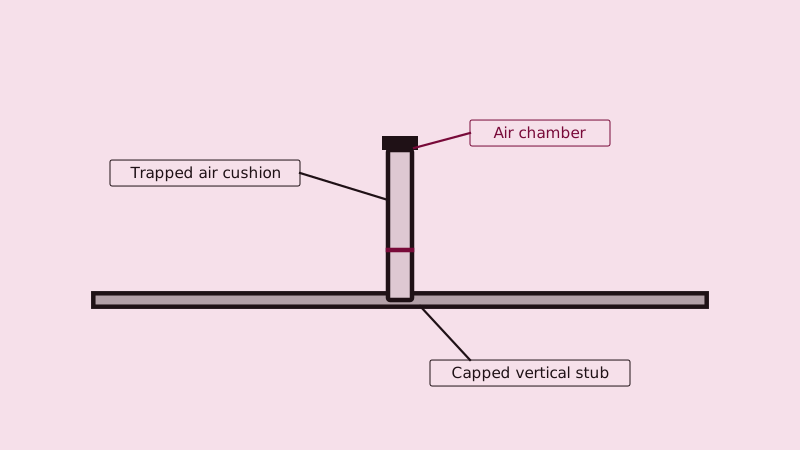
Recharging old air chambers is a homeowner-level step:
- Shut the main water valve.
- Open every faucet in the house, upstairs first, and let the pipes drain.
- Flush toilets to empty the tanks.
- Shut the faucets, reopen the main slowly, and let the lines fill.
As the water drains, air fills the chambers again. If the bang returns within days, the chambers have failed or there never were any. Water hammer arrestors, small sealed devices threaded onto supply lines at a washing machine or dishwasher, absorb shock better than a bare air chamber. Pipe straps and foam insulation can quiet a rattle against framing.
Can water hammer damage my plumbing?
Yes, over time. Repeated shock loosens fittings, stresses solder joints and wears out valves and appliance hoses. It rarely bursts a pipe by itself, but it can turn a weak joint into a leak. If you notice a drip or damp spot that began after the banging, treat it as a connected problem.
Leaks and burst pipes shows where this can lead, and the causes of pipe bursts are laid out separately. A toilet fill valve that squeals and bangs may be solved by fill valve repair.
Is this a DIY repair, and what is the price?
Cost follows the cause: a gauge check is cheap, strapping a few pipes is modest, and a regulator or arrestor project can run higher, which is why a written price matters. Many homeowners can recharge the chambers themselves. A plumber should handle regulators, main line work and any cutting into supply pipe.
For permit questions on main or supply pipe work in Whittier, call Whittier Building and Safety at (562) 567-9320. A quote that separates the pressure fix, the arrestors and the pipe strapping makes it easier to compare options. For the general rate picture, see hourly plumber pricing.
Who do I tell about banging pipes?
Tell us when the sound happens, which fixtures sit near it and any gauge reading, using the price request form. A plumber based locally visits your Whittier-area address and provides a price in writing first. We cover several service areas across southeast Los Angeles County, and the service areas page names each one.
Handy details: the age of the house, whether the banging is new, and whether you have had work done on the heater, regulator or supply pipe. Short video clips of the noise help.
Common questions
Can water hammer hurt anything?
The noise is not an emergency, yet repeated shock can work fittings loose and tire out valves and hoses. Deal with it before a leak forms. Banging that comes with a wet wall, a drip or a sudden pressure drop should get a plumber promptly.
Is this something I can handle on my own?
Partly. A gauge check, draining the system to restore air chambers and tightening visible straps are all reasonable first steps. Adding arrestors at appliances is a modest task. Hand the main, the regulator and hidden pipe over to a plumber.
Why does the washer thump when it finishes filling?
The inlet valve inside the machine snaps shut, and the water halts at once. An arrestor on the supply line soaks up that shock. High house pressure makes the thump worse, so read the gauge first, then decide whether an arrestor is enough on its own.
Why does the banging get worse after dark?
Street pressure can climb overnight once fewer neighbors are drawing water, and that can push a marginal house into hammering. A gauge reading late in the evening shows whether that is your case, and a working regulator keeps the house steady.
Does water hammer mean I need to repipe?
Rarely. Most hammer is cured by pressure control, secure pipes and arrestors. Repiping makes sense when the pipes themselves are corroded or failing, which shows up as leaks or discolored water rather than noise alone. A plumber can advise after an inspection.
References
- California Plumbing Code, section 608.2 (80 psi limit)
- City of Whittier Building and Safety Division