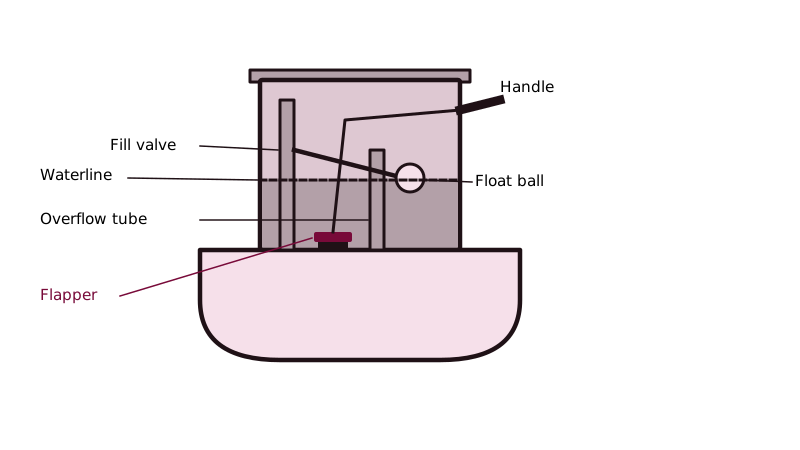
Slide the tank lid aside and observe one full flush. Pressing the handle yanks a chain, which hoists a rubber flapper and lets the tank drain into the bowl. A weak, slow or stuck step shows up as the symptom you are chasing. Most cures are cheap and quick. The page sits inside the toilet repair section of this site, and when parts are worn through or the tank has to come off, a local plumber can be arranged through the price request form.
What makes a flush feeble or stop halfway?
A weak flush usually means the flapper closes too early, the chain has too much slack, the fill level is low, or the rim jets and siphon passage are crusted with mineral deposits. The tank sends down too little water for the bowl, so the siphon never gets going. Each cause has a quick test.
Try these in order:
- Press the handle and keep your eyes on the flapper. A flapper that drops shut before the tank is empty needs a shorter float arm or one more link of chain.
- Find the waterline mark molded into the tank. Water resting below it calls for a higher fill setting.
- Tip a bucket of water into the bowl in one go. A strong flush points at tank volume, and a gurgle points at a partial blockage.
- Hold a mirror under the rim and look for rough, chalky crust. Whittier's city water averaged about 250 mg/L total hardness in its 2025 report, which is hard enough that minerals can build up on small openings over time.
If a weak flush comes with a gurgle in a tub or sink, the trouble may sit in the drain, and clogged toilet help fits better.
Why does the toilet go on running once the flush is done?
Close the supply, lift the lid, and inspect two parts: flapper and fill valve. When the flapper fails to seal, tank water seeps into the bowl and the fill valve keeps topping up the loss. A new flapper is the usual remedy, and the part itself is only a few dollars.
To be sure, add a little food coloring to the tank and give it ten minutes untouched. Tint reaching the bowl proves a leaking flapper. This is EPA's own test, and the agency lists worn flappers among the typical household leaks, advising a swap at least every five years. If the flapper is fine, the fill valve may be failing or the float set too high so water spills down the overflow tube. Running toilet fixes go through each case and replacing a fill valve shows the part.
How can I cure a loose or sticking handle?
A loose handle usually has a worn nut or a chain that slipped off the lever, and a sticky handle has a bent arm or a chain that catches. Reattach the chain, snug the nut (check the thread direction, since some handle nuts are reverse-threaded), and make sure the arm moves freely. If the handle snaps back lazily, replace it.
Handles are inexpensive and swap in minutes. Buy a handle that matches the tank's mounting, front, side or angle. If the chain is too long, it can wedge under the flapper and keep it from closing. If it is too short, it holds the flapper open slightly. Aim for a little slack, about a half inch. Our page on flapper repair shows how the chain and flapper work together.
When is the flush valve itself to blame?
The flush valve is the wide drain opening in the tank floor, and its seat can corrode or pit over time. If the flapper is new and still leaks, or water seeps around the base of the valve, the flush valve is at fault. Replacing it usually means removing the tank from the bowl.
Look at the seat with a flashlight: it should be smooth. Rough, pitted or cracked surfaces will not seal. Some repair kits fit over the old valve without removing the tank, which suits a toilet where the tank bolts are corroded, and replacing the flush valve without removing the tank describes that method. If the tank bolts are rusted, or the porcelain looks cracked, stop. A plumber can handle it without breaking the tank.
Where does DIY stop and a plumber start?
Make the call if water reaches the floor, the tank has a crack, the supply stop will not close, the shutoff drips, or fresh parts did not cure it. Also call when you cannot tell what you are looking at. A toilet repair can flood a bathroom if a bolt snaps.
Small repairs inside the tank are fair game for a homeowner. State law asks for a contractor license at $1,000 in labor and materials or whenever a permit is needed, a line a full toilet replacement may cross and a flapper never will. If the stop valve is the issue, see shutoff valve repair. A tank that rocks or a bowl that moves means a loose toilet seat or base. The home page lists other jobs we arrange.
What will a flush repair run?
Parts are cheap, while labor varies with the plumber and the job. No price appears here, since we hold no sourced local figure. A replacement toilet is covered in replacement toilet cost, and a repair is typically a fraction of that. Get the quote on paper first.
If the plumber finds more than one worn part, ask whether the fill valve, flapper and handle are priced as a kit. Replacing the full set at once often makes sense, since parts of the same age wear out together. Think of it as the same habit as changing an air conditioning filter on schedule: a small check once a year, not a rescue after something breaks. A toilet that is 20 or more years old may be better replaced than patched, and the plumber can tell you which makes sense. Care for the tank interior means cleaning scale from the flapper seat once a year with a soft cloth.
What is the correct way to stop the water before starting?
Rotate the oval handle of the small valve behind the toilet clockwise until it stops. Flush once and hold the handle so the tank drains, then sponge out the last inch. Now the tank is safe to open, and the bowl keeps its normal water.
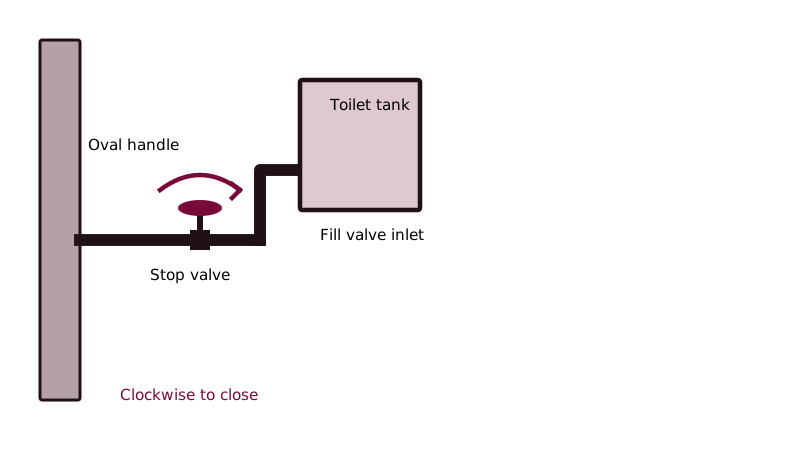
A valve that will not close, or that weeps at the stem, is a reason to shut the house main instead and have a plumber deal with the valve. Never force a seized valve. Old stops can crack. If you cannot get the water off, treat it as urgent, and for a toilet that is overflowing, repairing an overflow explains the tube inside the tank.
Common questions
What is a ghost flush, where the toilet refills by itself?
A refill with nobody touching the handle means tank water is slipping into the bowl and the fill valve replaces it every so often. The flapper is the usual suspect, and the dye test settles it. Fit a new one, and if the habit continues, suspect a tired fill valve.
Can I use a bleach tablet in the tank to keep the toilet clean?
Many plumbers advise against it, because chlorine tablets can degrade rubber flappers and seals. If your flapper has become soft, sticky or warped, a tablet may be the reason. A cleaner poured into the bowl and brushed is a safer choice, and a replacement flapper is cheap.
How often should toilet parts be replaced?
EPA's advice is to look at the flapper now and then and replace it at least every five years. Fill valves and handles last longer but wear out too. If you hear the toilet run, see the water level change, or notice the bowl refilling by itself, replace the part rather than waiting for the water bill to show it.
Is a running toilet a big deal for my water bill?
It can be. EPA puts the typical household's leakage at more than 9,300 gallons a year, with worn flappers among the common causes, and a toilet that never stops can lose far more. If your bill jumped and you cannot see why, check the toilets first with food coloring.