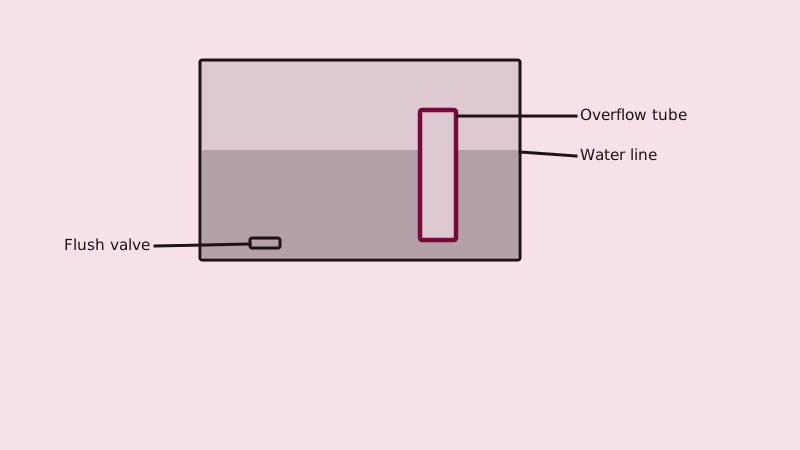
Lift the lid and look. Water level with the rim of the standpipe near the tank's center, and trickling over it, means the fill level is set too high. Lowering the float or replacing the fill valve ends the sound. A cracked tube is rare but possible. For other tank trouble, use the general toilet repair guide.
What is the standpipe inside the tank for?
It is a vertical drain bolted to the flush valve. When the tank overfills, the extra runs down it into the bowl and away through the toilet's drain, so it never reaches your floor. It also carries the thin refill stream the fill valve sends to the bowl after each flush.
A properly set tank stops filling a finger-width under the top of that pipe. Many fill valves carry a mark, the critical level line, showing where the water should stop. Once the level reaches the rim, the toilet runs on quietly, wasting water, with a faint trickle that carries into the next room.
A bowl that spills onto the floor is a different animal. That one is a blocked drain, handled by the clogged toilet plumber.
What sends water down the tube?
Most cases come down to three causes: a high float setting, a fill valve too worn to shut off, or grit and mineral scale holding the valve open. Less often the tube is too short or has a crack, which lets water escape through the flush valve.
- Float too high: the valve keeps filling until water tops the rim.
- Worn fill valve: the seal no longer holds, so water creeps upward. See fill valve repair.
- Debris in the valve: grit or a hard-water deposit props the seal open.
- Cracked tube: the tank leaks through the crack, and the toilet keeps refilling.
- Wrong height after a swap: some replacement valves need the tube cut to length.
Mark the tank wall with a pencil or strip of tape to see where the water settles after a fill. If the level stops under the rim, the tube is off the hook. If it reaches the rim, adjust the float.
How do you bring the water level down?
Shut the supply, flush, then change the float setting with the screw on a cup-style unit, sliding the clip along the rod, or gently bending the arm of an old ball float. Reopen the supply slowly, note where the water stops, and repeat in small steps until it settles under the rim.
Float styles vary:
- Float cup on the valve shaft: pinch the clip and move the cup down, or use the adjuster screw at the top.
- Ball and rod: bend the rod gently downward, or turn the screw on the valve body.
- Flat float on a side arm: set the stop with the screw at the valve.
A level that keeps creeping up after adjustment means the valve has worn out. Universal valves are inexpensive and take about twenty minutes. In hard water, plan to rinse the valve every year or two: the City of Whittier's 2025 report lists total hardness averaging 250 mg/L, and scale builds on valve seals.
How can you tell whether the tube itself is cracked?
Stir dye in, and keep your hand off the flush handle. When color reaches the bowl even though the water stands well beneath the rim, the flapper or the tube is leaking. Dry the tube off and inspect it by flashlight for hairline cracks.
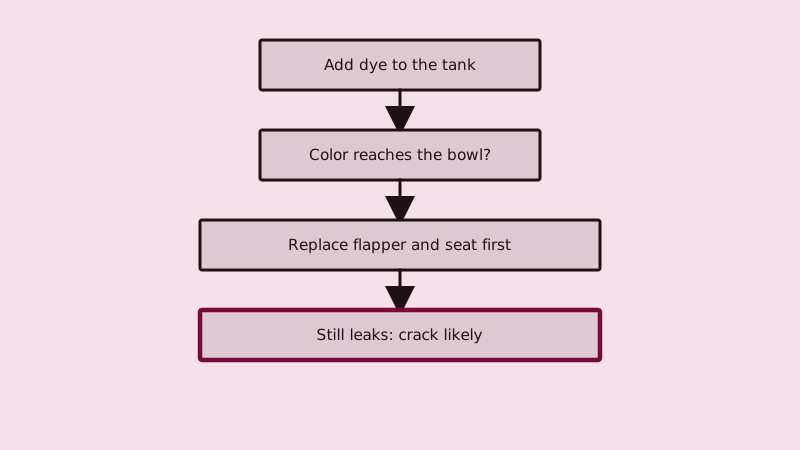
Flapper leaks and tube leaks look alike, so eliminate the flapper first. Wipe its seat and swap it if worn, per flapper repair. If dye still reaches the bowl after that, suspect a crack in the flush valve body or the tube.
The standpipe is a piece of the flush valve assembly, so a crack means taking the tank off its bolts or fitting a no-removal kit. The trade-offs are weighed in flush valve replacement without tank removal.
Can the tube be replaced on its own?
On most current toilets the pipe is molded into the valve, so the full valve gets changed, normally with the tank off. A few designs use a separate tube or push-on extension that swaps alone, and a tube that is merely too long for a new valve can be trimmed.
Close the shutoff, drain the tank and measure before cutting. A tube left too tall interferes with the flapper chain and can keep the flapper from sealing. If lifting a heavy tank and resetting the wax ring sounds like too much, call a plumber, because a tank set down wrong cracks the porcelain.
On an old or stained toilet, compare repair against replacement. Prices sit in toilet replacement pricing.
What does a plumber's visit tend to cost?
Adjusting a float or changing a fill valve takes little time. A 2026 cost survey lists toilet replacement at about $250 to $500 and a call-out charge of $75 to $200 as common. A flush valve job with the tank off takes longer than a fill valve and costs more. Have the price put in writing.
Running water adds up. The EPA warns that a single worn flapper can silently lose several thousand gallons in twelve months, and leakage across a typical home passes 9,300 gallons. A quick fix now beats finding out on the water bill.
To get a price on the repair, send a request. The Rio Hondo Plumbing main page describes how visits come together across Whittier and nearby cities.
Common questions
How full should the tank be?
A finger-width short of the standpipe's top, or at the fill line cast into the tank or printed on the valve. If the water reaches the pipe, lower the float a little at a time. If it won't stay beneath the rim after that, the fill valve is worn and should be replaced.
Why is it running if the water is under the rim?
Most likely the flapper leaks into the bowl, or the tube or flush valve has a crack. Color the tank water and wait. If the bowl turns the same shade without a flush, replace the flapper first, then examine the tube and the body of the valve for hairline cracks.
Can epoxy seal a cracked tube?
At best it is a temporary patch, and the pipe is just one piece of the flush valve. Replacing the flush valve is the dependable cure. A plumber may also use a flush valve repair kit that does not require lifting the tank, depending on the model.
Is water going down the tube wasted?
Yes. It runs straight to the drain unused, and you pay for every gallon. A toilet that keeps spilling into the tube can be a big share of the household leakage the EPA sets at over 9,300 gallons yearly, which makes this worth fixing quickly.