Thinking of buying a manufactured home, or already living in one? Get a plumber under the floor to examine the supply pipe, the drains, the heater and gas hookups, because most trouble sits below and behind. It is the same kind of check we describe under gas plumbers and backflow testing, applied to a lighter-built house.
What gets looked at during a manufactured home plumbing check?
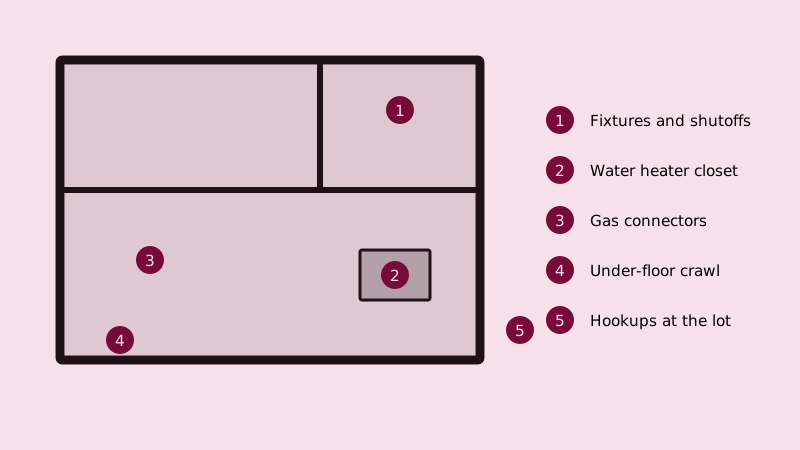
The visit starts inside: every fixture and shutoff gets operated, the water heater gets a look along with its vent, and gas connections are tested. Then the plumber crawls beneath for drain and supply lines, and records pressure and visible leaks. You are left with notes sorting the sound from the worn from the urgent.
A typical outline:
- Supply pipe: material, joints, leaks, kinks and valves.
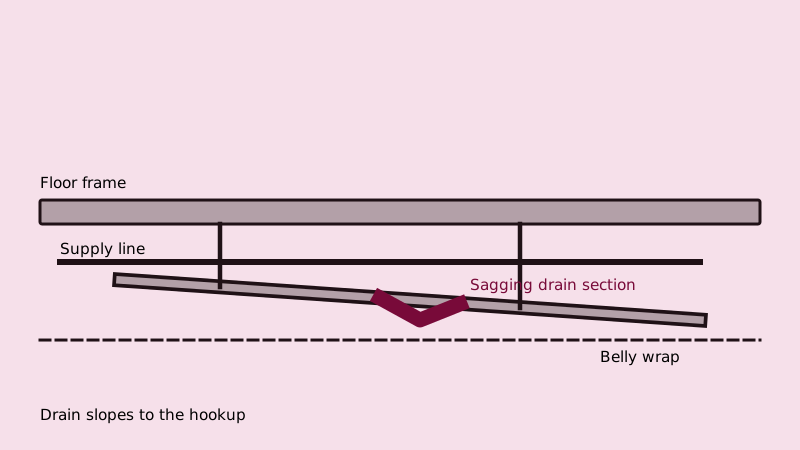
- Drain, waste and vent lines under the belly, plus slope and supports.
- Water heater: age, closet, vent, pressure relief line and bracing.
- Gas: appliance connectors, shutoff valves, any smell.
- Fixtures: toilets, tubs, sinks, faucets, and the seals around them.
- Water pressure at a hose spigot, and any regulator.
- Hookups: where the water and sewer meet the park or the lot.
Why are mobile home pipes a special case?
The structure is built in a factory, then moved, so pipes sit in a thin floor cavity with less room, and a belly wrap or skirting often covers the undersides. A slow leak can stay hidden for months. Wood and insulation near the floor soak up water, and the damage shows up as soft floors or a musty smell.
Plastic pipe is common, and older homes may have different materials than newer ones. Some contain polybutylene, a grayish plastic supply line with a track record of fitting failures, and polybutylene pipe replacement covers your options. On an older unit, ask the inspector to name the pipe type and fittings.
Which defects show up again and again?
Typical discoveries: slow leaks under sinks, a sagging or disconnected drain below the floor, a worn water heater, brittle supply lines, missing shutoffs and corroded gas connectors. Water damage to the subfloor around the bathroom is another repeat finding, because a tub or toilet seal can leak for years.
Ignoring leaks gets expensive, since EPA's estimate for the average household tops 9,300 gallons yearly in leaks, and a mobile home floor is thin enough for water to ruin. Cheap fixes like a new supply line or a trap come first, while bigger issues such as a failed drain section or a rotted floor are repair projects with their own quotes.
What does a gas check involve in a manufactured home?
The plumber looks at the line feeding the range, furnace and water heater, the flexible connectors, shutoff valves and the condition of the piping under the home. A gas odor means stepping outside first and use the SoCalGas hotline, 1-800-427-2200, once you stand well clear of the building. A flame is never a leak detector.
SoCalGas serves every city we cover, from its own city list. Gas pipework is contractor territory, usually with a permit attached. Repairs under a mobile home involve cramped access, and the plumber may also look at how the home connects to the park's gas riser. Details on pipework are in gas line installation.
Who sets the rules, and who inspects?
It depends on where the home sits. A home in a park, on rented space or on private land may fall under different oversight, and certain work involves a permit from the city. Ask the city, and the park manager if there is one, before work starts, since the answer changes who signs off.
In Whittier, call the Building and Safety counter at (562) 567-9320. Cities such as Downey and Norwalk have their own offices. Unincorporated pockets such as Hacienda Heights fall to County Public Works; its La Puente district office is listed at (626) 961-9611, but confirm by phone which office handles your address. Have the plumber confirm whether your job needs paperwork, because no single rule we found fits every park.
Should I get an inspection before buying a mobile home?
Yes, it is a smart move. A general home inspector may not crawl under the floor or test the plumbing in depth. A plumber can find leaks, poor repairs and old pipe, and the notes help you negotiate or walk away. The cost belongs in your purchase budget, and it is small beside a floor replacement.
The price follows the home's size, how easy it is to get under, and how much testing is requested. Our guide to plumber inspection cost explains typical pricing logic. Ask the seller for water bills, repair records and any park notices, and mention any plans, like a new water heater, whose price is covered in replacing a mobile home water heater.
What about pressure, backflow and winter?
Check static pressure, since a mobile home's thin lines handle high pressure poorly. A regulator near the hookup is common, and a gauge reading tells the story. The California Plumbing Code limit is 80 psi. If the lot has irrigation or a fire line, see backflow prevention testing.
Winter is milder here than in the mountains, but cold nights can threaten exposed lines under skirting, so insulation and wrap help. For cold-weather care see winterizing mobile home plumbing, and for how lines are laid out below the floor see plumbing under a mobile home.
Common questions
What amount of time does the visit need?
That varies with the home's size and with how reachable the underside is. A compact unit can wrap up in around two hours, while a larger one with trouble spots runs longer. The plumber should explain what will be tested. Have the water, gas and any crawl-space hatch accessible so the work is not delayed.
Do I have to stay while the plumber works?
Yes, ideally. Someone needs to unlock the door, point out the shutoffs, and okay the running of water and opening of access panels. A tenant may need the owner's consent. The findings come in writing, and the plumber can talk through each item.
Does the inspection include a water test?
Many plumbers check water pressure and flow, and some test water quality only if you ask. Local water quality reports come from the supplier. The City of Whittier's 2025 report shows hardness averaging 250 mg/L, so scale is something to look for on fixtures and the water heater.
What is the way to schedule one?
Give the address, the home's age, the kind of check you want and any known leaks using the price request page, and mention a closing date if there is one. We then arrange a local plumber, and what the check covers appears itemized in the written quote.
This guide is one of many on Rio Hondo Plumbing.