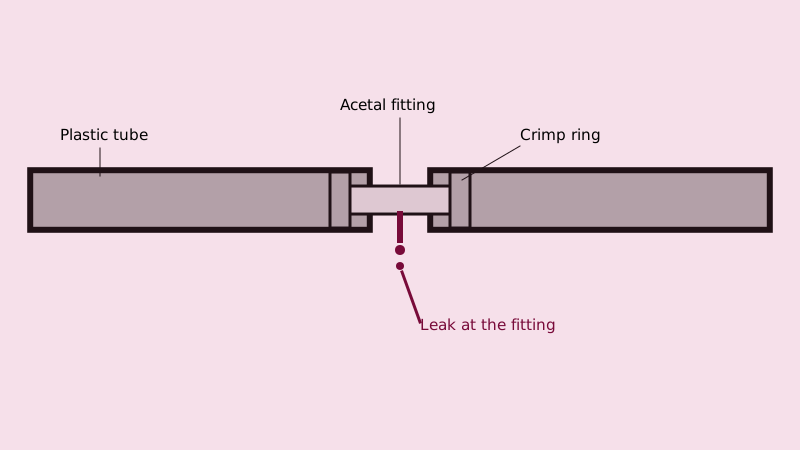
Between about 1978 and 1997, builders put polybutylene (PB) supply pipe into several million American homes. It then gained a name for sudden leaks, and current US codes do not accept it. Getting rid of it generally calls for a complete repipe, with PEX as the modern default. What follows covers spotting it, understanding the risk and planning the work.
Why does polybutylene pipe leak?
According to Wikipedia, the leaks come from disinfectants in municipal water, chlorine and chloramine, eating away at the tubing as well as the acetal plastic couplings. The harm usually starts inside the pipe, out of sight, and mechanical stress speeds it up. A length can look perfect outside while it weakens within.
That is the unsettling part. Polybutylene gives little warning, so years without a leak prove nothing about the next year.
The same source notes that polybutylene water pipe is no longer accepted by United States building codes, that the Cox v. Shell Oil lawsuit ended with a $1 billion settlement, and that Canada dropped the pipe from its approved list in its 2005 plumbing standard.
Could the pipes in my house be polybutylene?
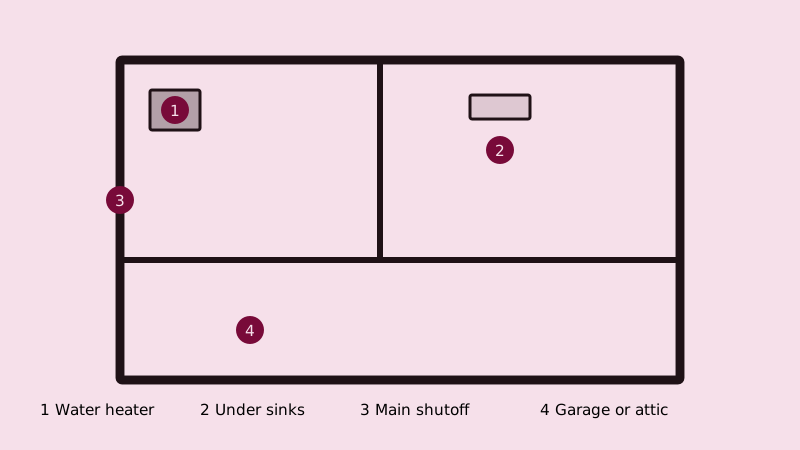
Inspect pipe you can reach: around the water heater, beneath sinks, at the main shutoff, in a garage or an attic. It is plastic rather than metal, and usually carries lettering such as PB along its length. A plumber identifies it quickly and also examines the fittings, which count as much as the tubing.
Age is the first filter. Homes built or repiped from about 1978 to 1997 deserve a look. Census figures put the median house in Paramount at 1971 and in Cerritos at 1974, so a good share of homes there sit near that window. Downey, Norwalk and Pico Rivera have medians of 1957 to 1959, earlier, although an old house may have been added to or repiped since.
Medians are not a diagnosis, and only the pipe itself settles the matter. Send photos of whatever you find so it can be identified ahead of a visit.
Must it come out, or can I wait?
Timing is generally the owner's call, and the city can say whether any local rule applies. The leak risk is real and the damage can be extensive, so some owners replace the pipe before trouble, some after the first leak, and some before a sale.
Leaks inside walls and ceilings can do harm for weeks before they show. If you own polybutylene, a plumber's assessment is worthwhile, along with reachable shutoff valves so water can be stopped quickly. Should a drip appear overhead, water through the ceiling shows what to do.
Insurers and buyers sometimes take an interest. Ask your insurer whether the pipe affects your policy and ask your agent what a sale requires you to disclose. We cannot answer for either.
What goes in instead, and what does a complete repipe mean?
A complete repipe renews every supply line between the street side and the faucets. PEX is the usual choice today, because the California Plumbing Code accepted it in 2009 and it snakes through walls with few joints. Copper is the main alternative. Budget, water quality and taste decide between them, and PEX or copper compared puts them head to head.
How a repipe is done describes the sequence, and why people repipe gives the reasoning.
Partial repairs exist. Some plumbers replace the worst runs or just the fittings, but that leaves polybutylene in the walls. A quote ought to say which approach it prices, so the scope is unambiguous.
How does a repipe run, and is a permit involved?
The plumber plans the new layout, shuts the water, makes small cuts in walls and ceilings, feeds new lines through, hooks up each fixture, pressure tests, and requests an inspection. Drywall repair follows, sometimes by another trade. A complete repipe is permitted work in California and the city inspects it.
In Whittier the permit comes from Building and Safety, (562) 567-9320. Permitted work belongs to a contractor with a current California license. Agree early on who files the permit and who patches the walls.
Expect disruption: water is cut for stretches of each work day, and holes in walls are part of the deal.
What should a repipe quote show?
No price is printed here, because the size of the house, the fixtures, how reachable the walls are, and the repair afterward all move it. The drivers are explained in full repipe pricing and PEX repipe pricing, while updating an old house's plumbing adds context where other pipe is ageing too.
A good quote names the material, number of fixtures, permit, wall repair and cleanup, and says whether water heater connections and shutoff valves are covered. Itemized quotes compare cleanly.
Open the price request form and give the house's age, its bathroom count, what you found and photos of the pipe. Other plumbing work we arrange is listed at Rio Hondo Plumbing.
Common questions
Can polybutylene still go into new work?
No. Wikipedia reports that polybutylene water pipe is no longer accepted by United States building codes, so it is not used in new work, though plenty remains in older homes. If anyone proposes repairing it with the same material, ask why, and ask the city inspector's view.
Is patching a single leak enough?
It is a temporary answer. Another section or fitting can fail, and since the pipe tends to degrade along its whole length, one leak is a warning about the rest. A plumber can stop an urgent leak and talk through replacing the remainder while you decide.
How long is a house without normal water during a repipe?
That depends on house size and wall access. Water is generally off during working hours, and drywall repair and paint come afterward. Ask for a written schedule naming the days involved and who handles the drywall, so there are no surprises on the day.
Does replacing it help a home sale?
It can, since buyers and inspectors often ask about polybutylene, and a permitted, inspected replacement is easy to document. Talk to your real estate agent about what must be disclosed, because we cannot advise on that. Keep the permit record with your house papers.
Where should I find the main shutoff before work starts?
The usual spot is beside the water meter, or on the wall where the pipe enters. Test that it turns now, in case a stuck or leaking valve needs replacing before anything else. A planned repipe has the plumber close it, and in a leak you close it yourself.