A bathroom remodel looks like tile and vanities, but the plumbing underneath sets the order of every other trade. Drains and supply lines go in before the walls close, and an inspection can pause the job if something is missed. Rio Hondo Plumbing sends a local plumber to remodel projects around Whittier and southeast Los Angeles County. This page covers what to plan for.
Which plumbing tasks sit inside a bathroom remodel?
At minimum, shutoff valves, supply lines and a drain connection for each fixture you keep. A fuller remodel adds a new shower valve, a new tub or shower pan drain, new toilet flange, relocated or added fixtures, venting, and sometimes new supply pipe back to the main. The scope depends on whether fixtures stay put.
Think in two phases. Rough plumbing happens when walls and floor are open: drains, vents and supply lines get set, then inspected. Finish plumbing happens after tile and drywall: faucets, valves trims, the toilet and sink go on and everything is tested.
Keep the phases in mind when you schedule tile, because a missed rough-in means opening finished work.
Does moving a toilet, sink or shower change the cost?
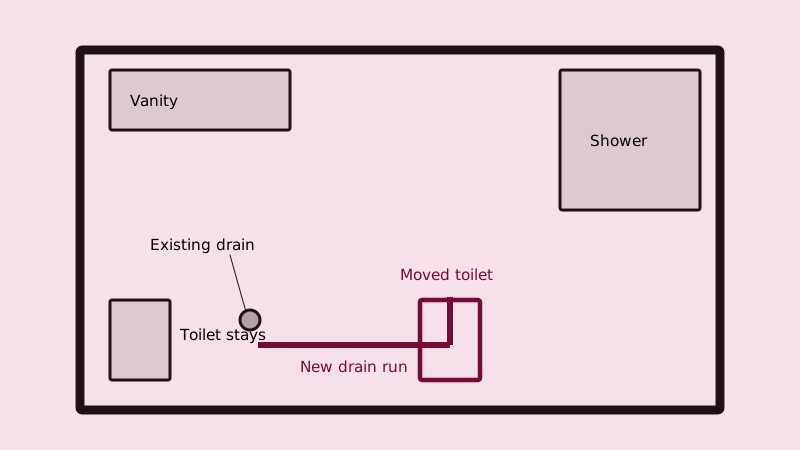
Yes, and often by a wide margin. Fixtures that stay in the same spot reuse existing drain and vent runs. Moving a toilet usually means a new drain path and vent, which may mean opening the floor or a wall below. A shower that moves has the same issue. The farther it moves, the bigger the job.
The slope of drain lines, the size of the pipe and the vent rules limit where fixtures can go. A plumber checks these before you buy tile. In a slab house the drain may sit under concrete, and moving a fixture can mean cutting the slab. So settle the layout before you buy anything.
We do not give a price range here because it depends on your layout. Ask for the quote to price fixture moves separately from a no-move version, so you can see the difference.
Which permit covers bathroom plumbing, and who issues it?
Plumbing work that adds or moves fixtures, drains or vents is generally permitted work, and each city runs its own counter. Whittier's Building and Safety Division is at (562) 567-9320. A cosmetic fixture swap may be treated differently, so ask the city. Permitted work belongs with a contractor whose California license is current.
Each nearby city has its own division. Some examples from city pages: Pico Rivera Building and Safety, (562) 801-4360, and Norwalk Building and Safety, (562) 929-5733. Downey's Building and Safety Division is at (562) 904-7142 and is closed Fridays. For other cities see the service areas pages.
Pico Rivera's permit FAQ states that work involving electrical or plumbing systems almost always needs a permit. Treat that as a good default anywhere in the region.
What should I know about old pipes in a remodel?
Opening a wall in a postwar house often reveals what is behind it. Houses dating from the 1950s and 1960s across Whittier, Downey, Norwalk and Pico Rivera often contain galvanized steel, copper or cast iron in places. Corroded galvanized supply and aging drains are easier to replace while the wall is open than later, and the cost of doing it then is mostly the pipe itself.
Census data lists the median home in Downey as built in 1959 and in Norwalk and Pico Rivera in 1957, which fits that picture. It does not tell you what is in your own walls, so a visit with the wall open is the only reliable check.
If the supply is galvanized, read about galvanized pipe replacement. If the whole house is a candidate, repipe a house explains that route. Drains behind the wall deserve a look too, especially cast iron with rust staining.
How should the remodel be sequenced with other trades?
Demolition first, then plumbing rough-in, then framing fixes, inspection, insulation and drywall, waterproofing and tile, then finish plumbing and trim. The plumber needs open walls before drywall and returns after tile. Electricians need to coordinate for fans, lights and heated floors, but their work is separate.
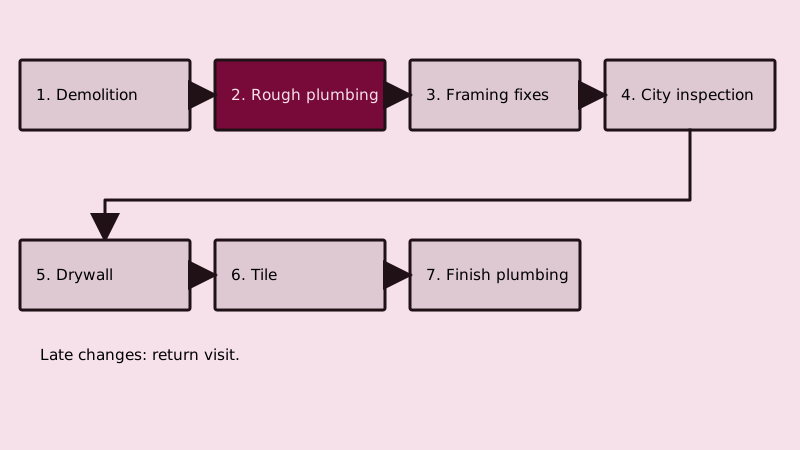
Tell every trade the plan. A shower valve has to sit at a depth that matches the tile thickness you picked. A vanity must have its supply and drain at the right height for the cabinet. Changing a tile or vanity after rough-in can force the plumber to return. Ordering fixtures early avoids that, since specifications decide rough-in dimensions.
Hot water also matters. A larger shower or a body spray can outrun an older heater. If you are adding fixtures, ask whether the existing heater can keep up, and read tank vs tankless water heaters if a swap is on the table.
What water pressure and supply concerns should I raise?
Low pressure, noisy pipes and temperature swings are better fixed during a remodel than after. If you plan a rain head or multiple heads, check that the supply can feed them. A tired pressure regulator can be swapped while the walls are open, and pressure can be tested at the outset.
Ask whether the supply valves and stops being installed are new and accessible. Access panels for shower valves are a small detail with a large payoff later.
Hard water around Whittier leaves scale on fixtures and cartridges. The city's own system reports total hardness averaging 250 mg/L in 2025, so choosing finishes that wipe clean and considering a softener can pay off. Different suppliers serve different streets, so check yours.
What should I settle with the plumber first?
Settle who obtains the permit, what the quote covers for rough and finish plumbing, who supplies the fixtures, how surprises such as rotted flooring or old pipe get handled, and when the inspection is expected. Insist on line items, not one lump sum.
Check a contractor's record on the CSLB site. Most remodels clear the $1,000 threshold where the license requirement starts.
Send what you know to our price request form: the city, the age of the house, which fixtures stay and which move, and what the house sits on, slab or crawl space. That shortens the first visit. A closer look at toilets sits under plumber toilet replacement cost, and shower leaks are covered in plumber for shower leak.
Common questions
Can the plumber work while the walls are still closed?
For a fixture swap in the same place, often yes. For anything that changes drains, vents or supply lines, the walls or floor need to be open, because the work and the inspection happen inside them. A quick look at the bathroom settles which category your project falls into.
Do I need the plumber before I choose tile and fixtures?
Ideally, yes. The plumber can check the existing drains, vents and supply for your plan, and fixtures you choose decide the rough-in dimensions. Choosing fixtures first and the plumbing second is a common cause of rework. Even a short visit before ordering can catch conflicts.
How long will the plumbing take in a remodel?
Rough plumbing is its own stage, finish plumbing is a shorter visit near the end, and both depend on scope and on when the city can inspect. A relocated drain or old pipe replacement adds time. The schedule you receive should show both visits and the inspection.
Is it a good time to update the shutoff valves?
Yes. Old stop valves that stick or leak are common failures in remodeled bathrooms. Replacing them while the walls and vanity are out is cheap compared with a later leak. Quarter-turn valves are easy to operate in an emergency, and an access panel for the shower valve is worth adding.
Which areas do you cover for remodel plumbing?
We arrange visits across Whittier, Downey, Norwalk, Pico Rivera, La Mirada, Santa Fe Springs, Bellflower, Paramount, Cerritos, Artesia, Hawaiian Gardens, La Habra Heights and Hacienda Heights. See the service areas page for local notes on each city, including who issues permits there.