Bob Vila's survey says a homeowner can expect around $4,000 to $12,000 for new plumbing in a home. That range is wide because a three-bath house with a gas tankless heater and a slab foundation bears little resemblance to a one-bath cottage. The tools to narrow it are on this page, and the home page covers other local jobs we set up.
What number goes in the budget for plumbing in a new home?
The best published single figure is $4,000 to $12,000 for whole-home plumbing, from Bob Vila. A different guide sets whole-house repiping, a related job, at anywhere from $4,000 to $15,000. Neither is a Whittier bid. Treat both as outer fences, and expect the final price to depend on your plans and fixture list.
Dollars per fixture is the logic most bids follow. Bob Vila lists sinks, toilets and faucets at $150 to $900 each when plumbing is replaced, and one guide puts a new toilet with a new rough-in at $400 to $900. A house with a kitchen, a laundry and three bathrooms has many such points, and each needs supply, drain and vent.
What happens at each stage of a new-build plumbing job?
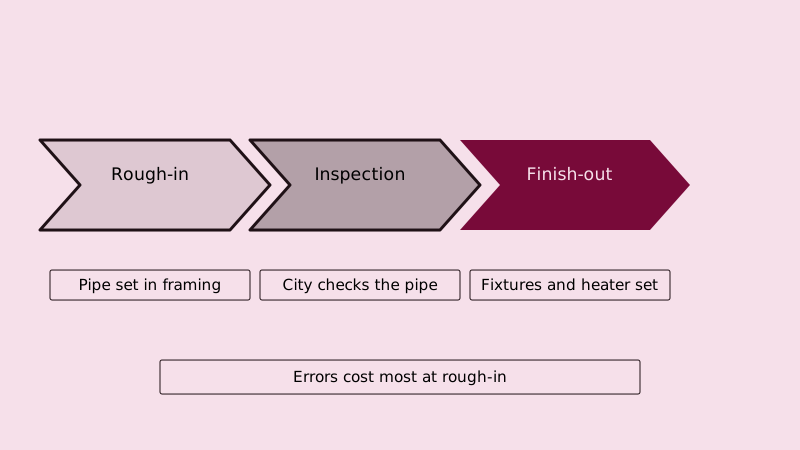
Work comes in three stages. Rough-in sets drain, vent and supply lines in the slab or walls before the finishes. Top-out or inspection covers the framed walls. Finish-out installs fixtures, valves, the water heater and connections once the surfaces are done. A city inspector signs off at the points the permit lists.
On a slab, drains must be placed before concrete is poured, so errors are costly to fix later. On a raised foundation, lines run under the floor. A plumber also sets gas piping for the range, dryer and heater, supply pipe from the meter, and the tie-in to the sewer. The main material decision is laid out in PEX versus copper.
Which factors move the price the most?
Fixture count, the number of bathrooms and distance between them lead the list. Next are foundation type, the fuel and size of the water heater, material choices, and whether the site has easy access to the water and sewer connection. Fancy fixtures and a second kitchen add up quickly.
More levers:
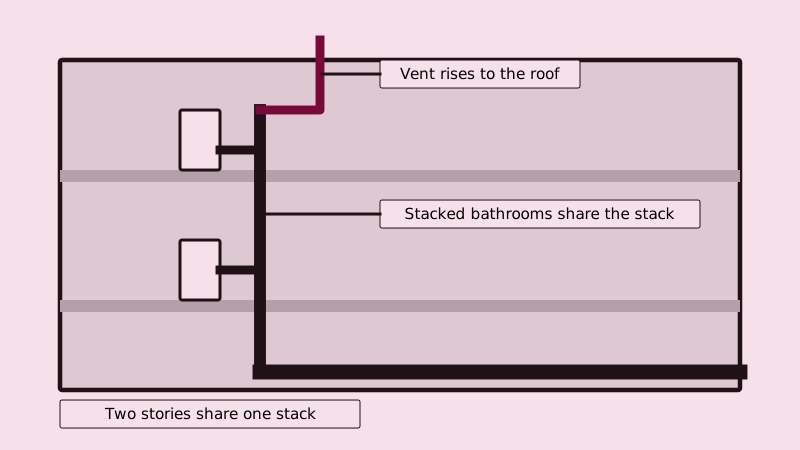
- Single story versus two story, since stacked bathrooms share vents and drains.
- Tankless versus tank heater, covered in tankless installation cost.
- Water treatment such as a softener loop, see softener installation cost.
- Backflow devices, lawn irrigation, a barbecue gas drop.
- Lot slope. Hillside lots in places like La Habra Heights and Hacienda Heights can mean longer runs and pressure adjustments.
Is a new house common in Whittier and nearby cities?
Mostly the work is rebuilds, additions, accessory dwelling units and a few infill lots, because the area was built out decades ago. Census figures put the median build year at 1959 in Downey, 1957 in Norwalk and Pico Rivera, 1960 in La Mirada and 1974 in Cerritos, so a lot of the stock is mid-century.
That affects cost. A rebuild may need new service lines, old pipes removed or capped, and an old sewer connection checked or replaced. An addition ties into plumbing that is decades old. Related costs show up in repiping with PEX and in updating an older house's plumbing. Also see bathroom remodel plumbing for the finish side.
What permits and inspections apply?
Every new plumbing system needs city permits and inspections from the building division, gas piping and water heaters included. In Whittier, Building and Safety Division is at 13230 Penn Street, (562) 567-9320. Other cities near us have their own offices, and some contract with Los Angeles County Public Works.
Permit and plan check fees belong in the bid or the owner's budget, so ask which. For the water and sewer connection, the supplier or city has its own meter or capacity charges that we did not find published, so ask them directly. California reserves permit work for contractors holding a state license, so ask for the number and check it through CSLB.
How do I compare bids from different plumbers?
Insist on the same scope in every bid: fixture list by room, materials, water heater model, gas piping, permit handling, inspections and warranty. A low number often leaves something out. Learn if the price is a lump sum or an hourly charge, how change orders work and who patches walls or trenches.
Hourly rates, where used, run from $75 to $150 for typical work in published guides, and master plumbers can reach $200. A fixed price for a defined scope protects you from overruns, while hourly suits unknowns. Bids should be written, itemized and dated. Labor pricing gets its own treatment in hourly plumber rates.
How can I hold the bill down?
Decide fixtures early, because moving a drain after rough-in costs more than a planning change on paper. Group wet rooms back to back, pick a standard-size water heater, and keep the heater close to the kitchen and baths to shorten hot water runs. Choose the plumber before the framing starts.
Do not save money by skipping inspections or hiring someone without a state contractor license. Insurance may not cover unpermitted work, and a failed pipe behind a finished wall is expensive. Use the written quote to compare, not the first phone number you hear.
Common questions
Is plumbing a big share of a building budget?
It is one of the major trades, but the share depends on the plans. Many builders treat it as a modest percentage of the construction budget, with bathrooms and kitchens driving most of it. Your own plumber's bid, based on drawings, is the number to plan around.
Does a slab foundation raise the price?
Often yes for repairs later, and sometimes for the build. Under-slab piping must be right before concrete is poured, and a mistake means breaking concrete. Raised foundations give access underneath. The plumber should explain how your foundation changes the scope and price.
Who pulls the plumbing permit on a new house?
The contractor generally does, and the permit fee ends up in the bid or the owner's costs. Ask the plumber and the general contractor who is responsible. The city building division, such as Whittier's at (562) 567-9320, can tell you what is required for your project.
What should I send to get a bid on my project?
Share the address, whether the project is a rebuild, addition or ADU, how many bathrooms and kitchens it has, and your plan set via the price request form. After we arrange the plumber, a written quote spells out the scope of work.