When a water heater quits, the culprit is often one small part. Gas models fail at the pilot or thermocouple, electric ones at an element or thermostat, and either type can lose a valve. Wider options live in water heater repair and replacement. This page speaks to a heater that is acting up today, or one overdue for a checkup. To book a visit from a local plumber, use the price request form.
What is included in a service visit?
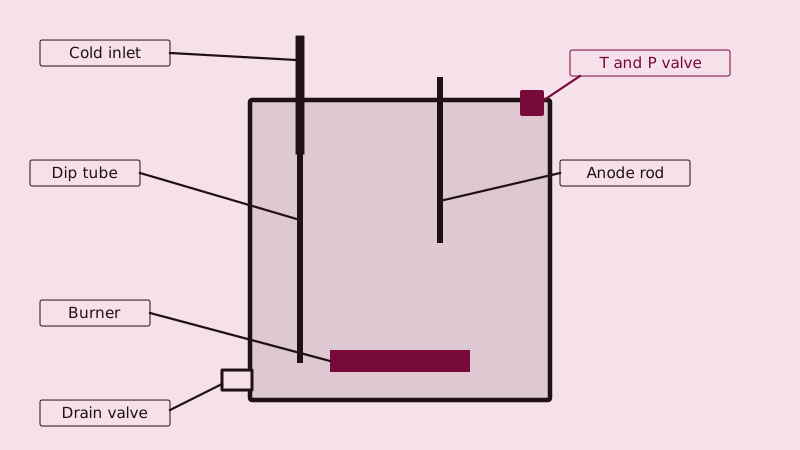
A service visit looks over the whole heater rather than a single symptom. The plumber reads the temperature setting, tests the relief valve, inspects fittings and the vent, hunts for rust and seepage, drains sediment from the tank, and examines the anode rod. Gas models also get a burner and flame check.
The flush and the anode rod do the most for tank life. Sediment settles at the bottom and makes the tank rumble and heat slowly. The anode rod corrodes in place of the tank, and once it is gone the tank starts to rust. Whittier's city water averaged about 250 mg/L total hardness in its 2025 report, near 14.6 grains per gallon, so heaters in the area are exposed to scale. See anode rod replacement for the part that matters most.
What causes a complete loss of hot water?
With gas, first see whether the pilot is lit and the gas valve is open, since a pilot that keeps dying often means a worn thermocouple. With electric, look at the breaker, the reset button, then the elements and thermostats. A tripped breaker is a symptom of something else.
If the pilot will not light after one safe attempt following the label's instructions, stop and call a plumber. If you ever smell gas, leave the building, call SoCalGas at 1-800-427-2200 from outside, and call 911 if there is danger. SoCalGas serves all the cities we cover. Electric faults mean mains power, so do not open panels while wet. For causes in more depth, see why a water heater is on but gives no hot water and no hot water in the shower.
Why does the water turn lukewarm or run out fast?
Lukewarm water points to a failed lower element or thermostat on an electric heater, a burner that runs poorly on a gas heater, a dip tube that has broken down, or sediment in the tank. Running out fast suggests a failed dip tube or element. A thermostat set too low is the first thing to check.
A dip tube sends incoming cold water to the bottom of the tank, and when it cracks, cold water mixes with hot at the top. Elements heat one at a time and the lower one does most of the work. A plumber can test an element with a meter. For parts, see replacing a water heater element and dip tube replacement. If you want the thermostat lower for safety, lower the setting a little at a time to reduce scalding risk, especially with children at home.
What should I do about a leaking heater?
Where the water appears matters. A leak from a fitting, valve or pipe connection on top can often be repaired. Water from the tank body or a pool under the unit means the tank has failed, and no repair is possible. Shut off the water to the heater and the gas or power, and call.
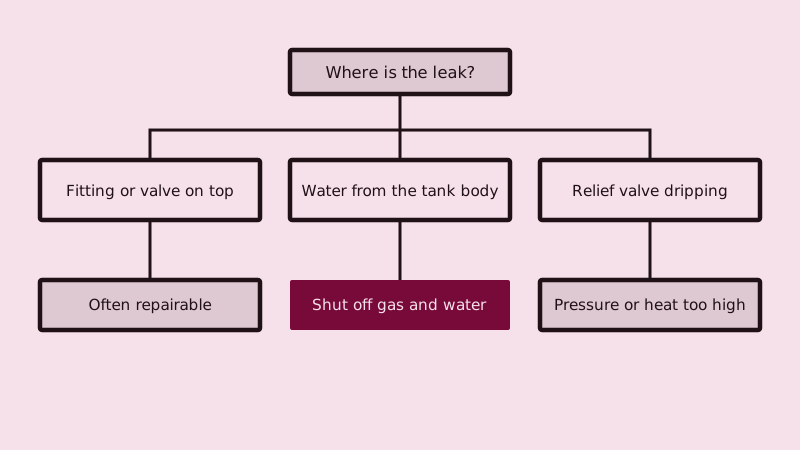
A relief valve that discharges is a separate problem. It means pressure or temperature is too high, which may come from a closed system without an expansion tank or from a failing thermostat. Do not cap a discharge pipe. See replacing the pressure relief valve, expansion tank replacement and water heater leak repair. If the heater is leaking and old, replacing it is usually the answer, and replacement cost lists guide prices.
What are the rumbling, popping and rotten-egg smell about?
Rumbling and popping come from sediment trapped under the burner or around the element, where water boils and steam bubbles through it. A flush often solves it. A rotten-egg smell usually comes from bacteria reacting with the anode rod in the tank, and is cured by flushing and sometimes by changing the anode.
If the sound continues after a flush, the plumber may descale the tank or suggest replacement. A heater that is noisy and also leaks is on its way out. If the smell is noticeable and you have a gas heater, rule out gas first: natural gas carries an added odor that many people compare to sulfur, and the same steps apply. Leave the building and call SoCalGas from outside.
Repair or replace, which makes sense?
Repair when the tank is dry, the heater is under about ten years old and the fault is a part such as a thermostat, element, valve or thermocouple. Replace when the tank leaks, the unit is past its expected life, or several parts are failing. The Department of Energy says most storage heaters last 10 to 15 years.
Ask the plumber for the repair price and the replacement price side by side. A heater that needs a second major repair within a year or two is a poor investment. California requires new and replacement water heaters to be strapped, and replacement needs a permit in most cities, so replacement adds items that repair does not. See thermocouple replacement and the rules on tankless service if yours is a tankless unit. For emergencies, emergency water heater repair covers leaks and no-heat faults. The home page lists everything else we arrange.
What does California law say about who does the work?
California requires a contractor license for work of $1,000 or more in labor and materials and for any job needing a permit, and gas work is regulated. Simple tasks such as relighting a pilot by the label's steps, resetting a breaker or draining a bit of sediment are within a homeowner's reach.
Anything that touches gas piping, the vent, the relief valve or the electrical supply to the unit should go to a plumber. A written contract is required for work of $500 or more. Ask for the diagnosis, the repair and the parts on the quote, and ask what warranty applies to the part and the labor.
Common questions
How frequently does a heater need service?
Once a year is the usual advice, especially in hard water. A yearly visit lets the plumber flush sediment, check the anode rod, test the relief valve and look for early rust or leaks. If you have never had the heater serviced and it is several years old, start now.
How long is the heater out of action during a repair?
Many repairs, such as a thermocouple, thermostat or element, take an hour or two once the part is in hand. A repair that needs a part ordered can take longer. Ask whether the plumber carries the part, and when hot water will be back.
What questions should I put to a repair company first?
Ask for the diagnosis in writing, the repair price and a replacement price for comparison, and how the part and labor are covered. Ask who pulls any permit. Ask whether sediment, the anode rod and the relief valve will be checked while the plumber is there.
Can I turn the temperature down to save energy?
Yes, within limits. A lower setting trims energy use and lowers the scald risk, and most manufacturers ship the unit with a moderate default already. Read the label first, then ask the plumber what setting suits your household and the model before you change it.